
Mammillaria schwarzii
Mammillaria schwarzii
Description
Sowing dates
The sowing of Mammillaria schwarzii seeds should take place in early spring, typically around March. This timing aligns with the natural start of the growth cycle, allowing the young seedlings to benefit from increasing daylight hours.
Use a shallow, well-draining container filled with a sterilized, sandy substrate that is low in organic matter. Scatter the seeds on the surface and press them lightly into the soil, but do not bury them, as they require some light to germinate.
Maintain a high-humidity environment by covering the container with clear plastic or glass. A consistent temperature of 22–26 degrees Celsius is necessary to ensure a high germination rate and strong early development of the tiny cacti.
Once the seedlings have emerged, gradually introduce ventilation to prevent fungal damping-off. Keep the substrate lightly moist, avoiding waterlogging, which can be fatal for sensitive newborn cacti during their first few weeks.
Transplanting (pricking out) into individual small pots should only occur after several months when the seedlings are robust enough to handle the stress. This process helps them establish a wider root system for better future growth.
Growing requirements
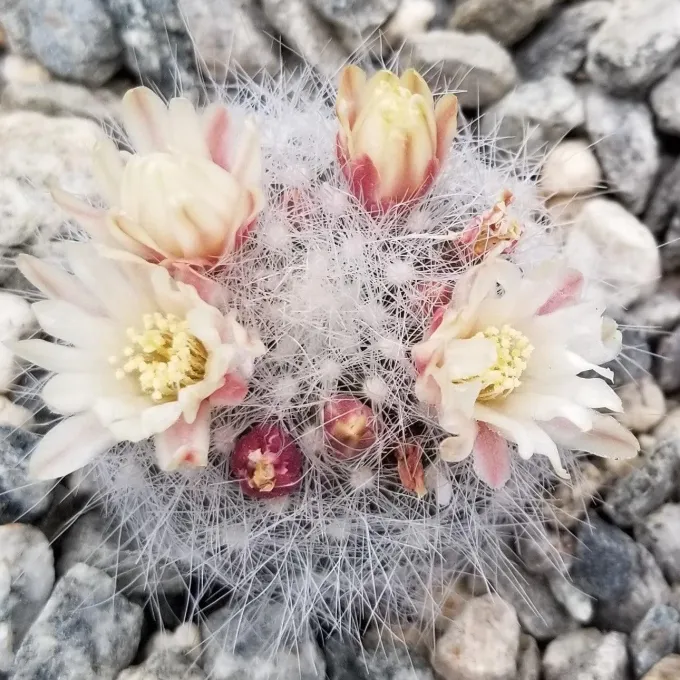
Mammillaria schwarzii is a distinct member of the Cactaceae family, native to the arid rocky regions of Mexico. It is characterized by its compact, globular form and is often appreciated for its dense, snowy-white spines that provide high decorative value.
This species requires intense sunlight to maintain its natural, compact shape and healthy spine production. Placing it in a south-facing window is ideal, provided the plant is gradually acclimatized to avoid sunburn after the winter period.
The soil requirements are strict: use a highly porous mixture containing sharp sand, gravel, and perlite. A heavy, peat-rich soil will retain too much moisture, which often leads to root rot, the most common killer of this cactus species.
Watering should be deep but infrequent during the growing season. Always wait for the soil to dry out completely between waterings. Use only tepid water, and avoid getting moisture on the main body of the cactus, which can stain the spines.
During the dormant period from late autumn to early spring, the plant must be kept dry and cool, ideally between 8 and 12 degrees Celsius. This dormant period is critical for developing the energy required for the plant to flower in the coming season.
Main diseases and pests
Fungal diseases related to overwatering represent the primary threat to the longevity of Mammillaria schwarzii. If the root zone remains wet for too long, the tissues will soften, leading to rot that can move rapidly up the stem.
Mealybugs are the most common pests, often lodging themselves in the deep axils between the tubercles. Their presence is marked by white, cotton-like masses, which need to be removed promptly to prevent infestation spread.
Red spider mites may appear if the indoor air is too dry and stagnant for extended periods. These pests damage the skin of the cactus, resulting in unsightly discolored patches that can permanently impair the plant's appearance.
Regular inspection of the plant's surface, particularly the crown and between the spines, is the best strategy for pest management. Using a soft brush to clean the body of the plant can also help dislodge dust and minor pest colonies.
In case of severe infestation or infection, apply a targeted insecticide or systemic fungicide as needed. Maintaining proper airflow and adhering to a strict dry winter regime significantly reduces the likelihood of these threats arising.