
Mammillaria polythele
Mammillaria polythele
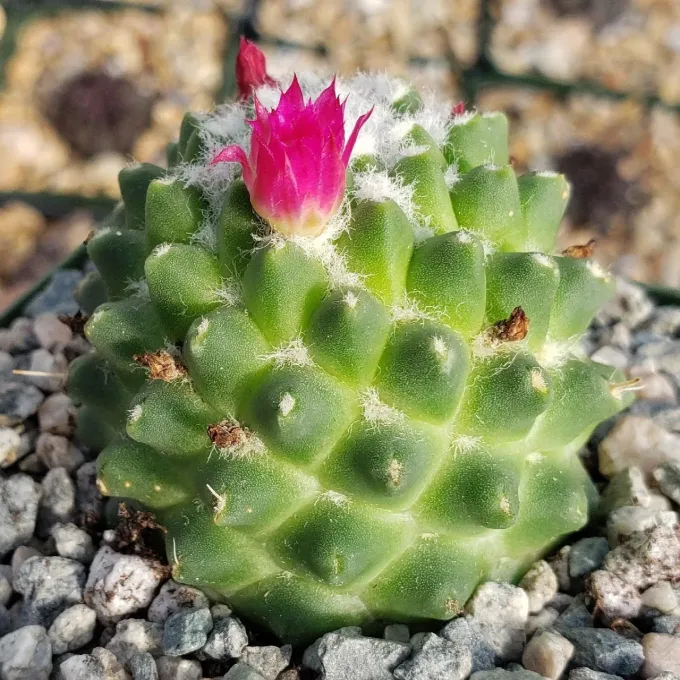
Description
Growing requirements
Mammillaria polythele is a distinguished member of the Cactaceae family, known for its cylindrical stem and dense cluster of spines. It is a succulent species highly valued in horticulture for its ornamental appearance.
Native to Central Mexico, specifically regions within Hidalgo and Queretaro, this plant thrives in rocky, well-draining limestone soils. It is well-adapted to high-altitude, dry environmental conditions.
Cultivation requires full sun exposure to maintain the plant's robust growth. Proper lighting prevents etiolation, which is common when succulents are grown in low-light environments.
The growing medium must be highly inorganic and porous. A standard cactus mix, heavily amended with coarse sand, volcanic rock, or pumice, is ideal for providing the necessary aeration for roots.
Temperature management is critical: summers should be warm (22–28 Celsius), while winter dormancy requires cooler temperatures (10–12 Celsius) and absolute dryness to stimulate healthy flowering in the spring.
Main diseases and pests
Mealybugs are the primary pest affecting Mammillaria polythele. They often hide in the woolly axils of the tubercles, making early detection difficult without a thorough inspection.
Root rot, triggered by overwatering, remains the most significant threat to the survival of the plant. Once the root system is compromised, the stem often collapses rapidly.
- Use systemic insecticides to combat hidden infestations in the dense spine clusters.
- Ensure excellent air circulation to reduce humidity levels around the stem, especially during winter months.
Spider mites can affect the epidermis of the plant in extremely dry conditions, causing unsightly browning and scarring. Regular misting (if done in warm conditions) or chemical control can prevent this.
Using sterile soil components during repotting is an essential agronomic practice to prevent soil-borne diseases such as bacterial soft rot from taking hold in the plant's vascular tissues.