
Mammillaria plumosa
Mammillaria plumosa
Description
Sowing dates
Propagation of Mammillaria plumosa is primarily achieved through seeds or by carefully removing and rooting the offsets that the plant produces over time.
Sowing should be done in early spring to utilize the increasing day length, which significantly boosts the germination rate and initial development of the seedlings.
The ideal substrate for sowing is a highly porous, sterile mix consisting mostly of fine grit, sand, and a minimal amount of organic matter.
Seeds are sown on the surface and should not be buried deep, keeping the environment humid with a cover until they establish their initial structure.
Once the young seedlings develop their characteristic feather-like spines, they need proper ventilation to prevent damping-off diseases and fungal growth.
Growing requirements
Mammillaria plumosa, a member of the Cactaceae family, originates from the limestone cliffs of northern Mexico, which defines its specific soil requirements.
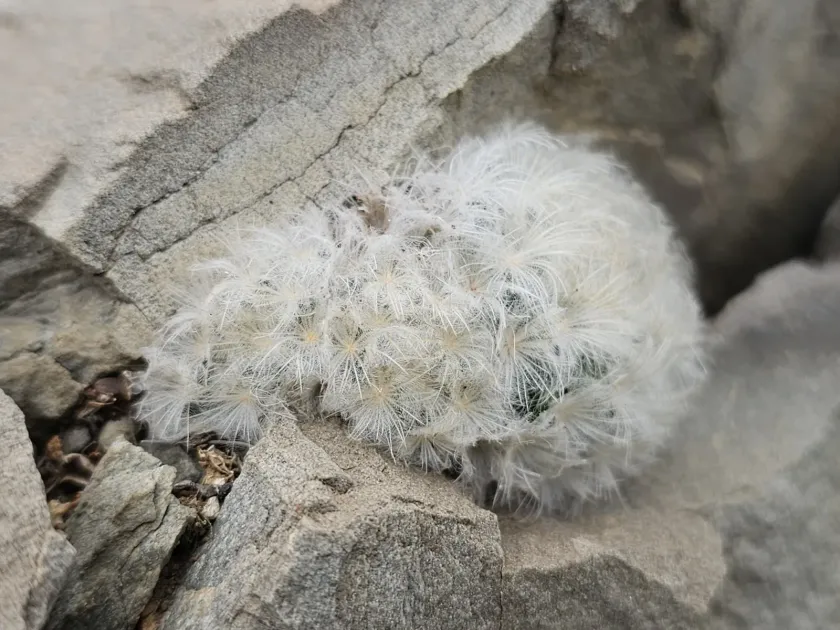
The plant is famous for its dense, soft, white spines that cover the stems entirely, making it one of the most sought-after species for collectors.
It requires an exceptionally well-draining soil mix; standard potting soils are unsuitable and will likely lead to the rapid decay of the plant.
Light levels should be high and bright, but protection from direct midday sun is necessary to prevent severe scorching of the plant's delicate epidermis.
During the winter rest period, the plant should be kept in a cool, dry place to simulate its native dormant season, ensuring health for the next growth cycle.
Main diseases and pests
Root rot, caused by excessive moisture or poor soil drainage, is the primary threat to the health and longevity of this cactus species.
Mealybugs are common pests that thrive within the dense, feathered spines, often remaining undetected until the infestation becomes significant.
Red spider mites can cause unsightly damage by feeding on the plant's surface, which is particularly common in environments with very low humidity levels.
Pest management should focus on early detection, using mild systemic insecticides that do not leave residue on the delicate white spines.
Maintaining proper air circulation around the plant is essential to prevent fungal outbreaks and to manage the moisture levels in the surrounding microclimate.