
Mammillaria petrophila
Mammillaria petrophila
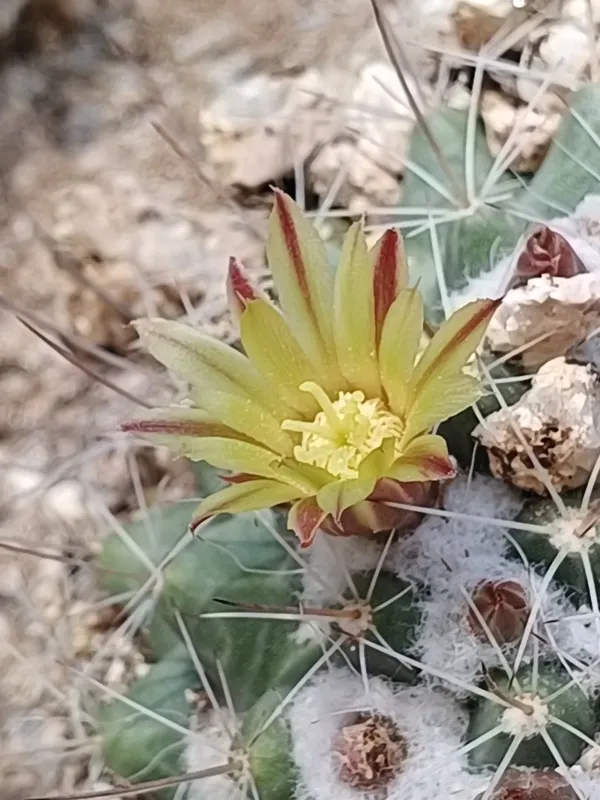
Description
Growing requirements
Mammillaria petrophila is a distinctive species within the Cactaceae family. Originating from the Baja California Peninsula in Mexico, this cactus is naturally adapted to rugged, rocky habitats where it grows in crevice environments with limited soil availability.
The plant features a globular or short-columnar stem with dense tubercles. A defining botanical characteristic is its complex spine structure, which serves both as a protection mechanism against herbivores and a way to mitigate high solar radiation by providing partial shade to the succulent epidermis.
Optimal cultivation requires a bright, sunny location with full exposure to light to maintain a healthy growth habit. In greenhouse or indoor conditions, ensure high light intensity, as the plant will become etiolated and weakened if kept in shaded areas.
Soil requirements focus on extreme drainage. The ideal growing medium is a mixture of mineral-based components, such as pumice, coarse sand, and a minimal amount of organic matter, ensuring the roots dry out quickly after every irrigation event.
Temperature management is crucial, with a necessary cool dormancy period during the winter months. Proper temperature drops during the night and dry conditions promote flowering, which is a key aesthetic goal in the commercial and amateur cultivation of this species.
Main diseases and pests
The primary threats include root rot and fungal infections triggered by excessive soil moisture and poor ventilation. Common pests include mealybugs and spider mites, which tend to hide within the dense spine network, making regular monitoring and appropriate preventive treatments essential.