
Mammillaria perezdelarosae
Mammillaria perezdelarosae
Description
Sowing dates
Seed propagation of this culture requires a strict temperature regime between +20 and +25 degrees Celsius. Sowing should be carried out in a loose, well-draining substrate based on sand and peat.
Germination is often uneven, so maintaining moderate soil moisture is crucial while avoiding waterlogging, which leads to seedling rot. The optimal time for sowing is during the spring season when daylight hours increase.
The first transplanting (pricking out) is carried out after the initial spines appear, once the plant is robust enough to handle the move. It is necessary to use mini-greenhouses with regular ventilation to prevent fungal infections.
Young cacti require careful watering via immersion or bottom-up methods to ensure water does not touch the surface of the delicate epidermis. Gradual acclimation to direct sunlight should begin only a few months after pricking out.
To accelerate growth during the first year, artificial grow lights are used, which helps form a healthy habit and prevents the stems from becoming etiolated or elongated.
Growing requirements
Mammillaria perezdelarosae belongs to the Cactaceae family and is a miniature plant native to Mexico. In nature, it grows in the mountainous regions of Jalisco and Aguascalientes at altitudes up to 2000 meters above sea level.
The plant prefers bright, intense lighting but requires shading from the midday summer sun to prevent epidermis burns. Good air circulation is a mandatory condition for preventing moisture stagnation in the root zone.
The soil mixture must be highly porous, consisting of at least 50% mineral components: gravel, pumice, or coarse sand. A slightly acidic to neutral soil pH is important to ensure optimal nutrient absorption.
During the active growing season, watering should be moderate, performed only after the soil ball has dried out completely. In the winter dormant period, watering is reduced to a minimum, keeping the plant at temperatures around +10–12 degrees Celsius.
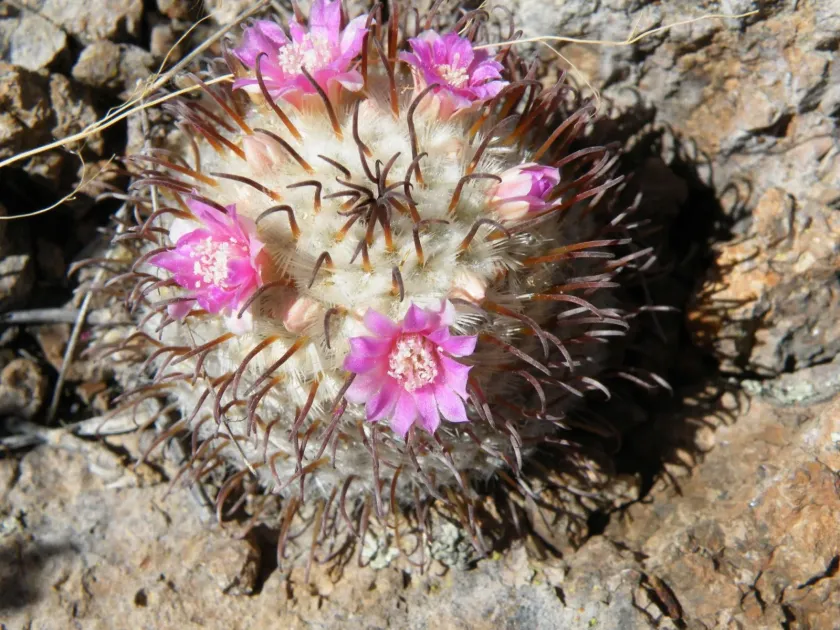
Botanically, it is a globose to slightly elongated cactus with dense pubescence consisting of white radial spines and contrasting brown central spines. This spine structure allows the plant to efficiently harvest condensation in its dry mountain habitat.
Main diseases and pests
The most dangerous pest for this species is the mealybug, which hides among the dense spines and in the axils of the tubercles. Affected areas become covered in a white, cotton-like substance, which rapidly weakens the plant.
Root rot is the primary threat when watering regimens are violated or when heavy, moisture-retaining soils are used. Symptoms include the softening of the stem base and discoloration to a brownish or yellowish hue.
The red spider mite can damage the epidermis in conditions of excessively dry air and poor ventilation. Infestation results in characteristic dry, rust-colored spots appearing on the cactus stem.
To combat pests, systemic insecticides and acaricides are used, treating both the soil and the aerial parts of the plant. Careful dosage is vital to avoid causing chemical burns to the cactus's sensitive tissues.
Disease prevention consists of maintaining hygiene in the collection, using sterilized soil, and periodically inspecting the root collar for signs of fungal spore development.