
Mammillaria peninsularis
Mammillaria peninsularis
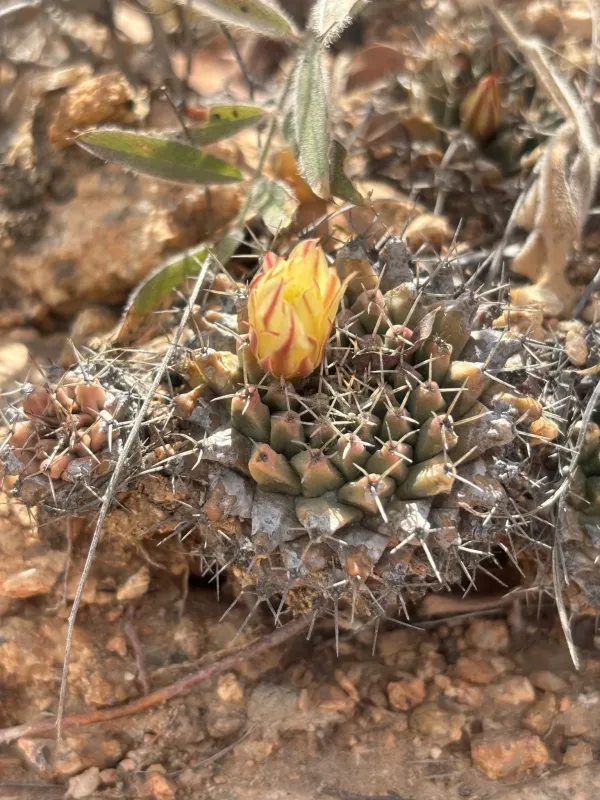
Description
Sowing dates
Propagation of Mammillaria peninsularis is predominantly achieved through seeds, which are best sown during the early spring months to leverage natural light cycles.
The substrate for germination should be highly porous, consisting of a mix of pumice, perlite, and sterilized coarse sand to ensure optimal aeration for the delicate roots.
Seedlings require a consistent temperature of approximately 24 degrees Celsius and high relative humidity provided by a clear, sealed cover during the initial development stage.
Gradual acclimation to lower humidity is necessary once the first spines emerge to prevent the succulent tissues from becoming etiolated or prone to damping-off disease.
Vegetative propagation by separating offsets is also possible; however, this method is less common for species that produce a single robust stem like this one.
Growing requirements
Mammillaria peninsularis is a distinct species within the Cactaceae family, native to the arid peninsula regions of Baja California, Mexico, where it thrives in rocky terrain.
This species demands full, unobstructed sunlight for the majority of the day to maintain its compact growth habit and promote the formation of characteristic spines.
The potting medium must be inorganic and gritty, providing superior drainage; standard commercial cactus mixes often require added grit to meet these specific needs.
Watering protocols should strictly follow the cycle of the seasons, allowing the soil to dry out entirely between irrigation sessions throughout the growing period.
A dormant period during the cooler winter months, characterized by minimal or no water, is essential for the plant to recover and initiate flowering in the following season.
Main diseases and pests
Mealybugs are the most persistent pests for this species, often clustering deep within the axils of the tubercles, making them difficult to detect and eradicate.
Root rot is the most significant physiological threat, usually caused by overwatering or soil mixes that retain excessive moisture for too long.
Spider mites may manifest during hot, dry summer conditions, causing discoloration and scarring on the epidermal layer of the cactus stem.
Preventative care involves ensuring excellent airflow around the plant, which minimizes the risk of fungal proliferation and bacterial infections in the root zone.
Integrated pest management, including regular inspection and the use of targeted systemic insecticides, is recommended for maintaining the health of the collection.