
Mammillaria orcuttii
Mammillaria orcuttii
Description
Growing requirements
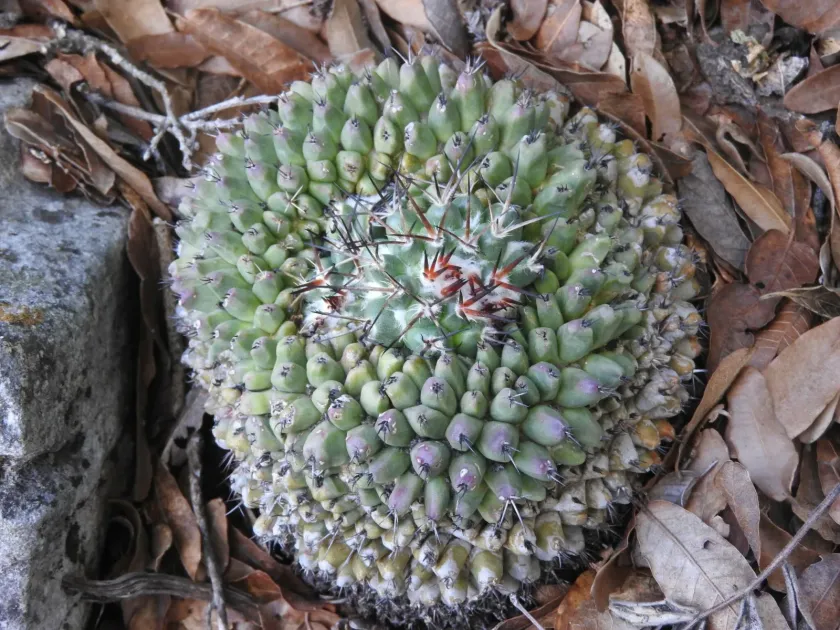
Mammillaria orcuttii is a distinctive member of the Cactaceae family, known for its spherical to elongated stem covered in intricate spines. Native to the arid terrains of Baja California, this species is well-adapted to surviving in extreme environmental conditions with minimal moisture.
For successful growth, this cactus requires intense, direct sunlight. Placing the plant in a bright location is essential to prevent etiolation and to ensure the proper development of its characteristic spines, which provide natural protection against the sun.
The substrate must be extremely well-draining. A professional-grade cactus mix, further improved with volcanic rock, coarse sand, or pumice, will ensure the roots do not remain damp, which is critical for preventing physiological stress in this succulent culture.
Temperature control is fundamental during the different phases of growth. During the active season, it thrives in warm temperatures between 22°C and 28°C. A cooler dormant period with temperatures around 10°C is necessary to promote the formation of floral buds for the following year.
Watering should be performed only when the soil has completely dried out. The "soak and dry" method is highly recommended, ensuring that the cactus remains dry during the winter months when the plant enters its period of dormancy, significantly reducing the watering frequency.
Main diseases and pests
The most common threat to Mammillaria orcuttii is fungal rot, which typically stems from overwatering or inadequate soil drainage. If the stem becomes mushy or discolored at the base, it is a clear indicator that the plant requires immediate surgical intervention and repotting.
Mealybugs are frequent pests that settle in the dense woolly axils of the plant. Because they are often hidden, it is crucial to perform regular inspections, especially during the spring and summer growth cycles, to catch any infestations early on.
Spider mites are a significant concern in environments with low humidity. They typically manifest as a fine, web-like substance and cause the epidermis of the cactus to become discolored or spotted as the insects feed on the plant's sap.
To treat infestations, use targeted acaricides or systemic insecticides suitable for succulents. Applying these in the early morning or evening ensures that the cactus is not under heat stress, preventing potential burns to the epidermis from the chemical application.
Preventative measures include maintaining good airflow around the plants and ensuring the substrate is fully aerated. Keeping the surrounding area free of debris helps minimize the spread of common cactus pests and fungal spores in greenhouse or indoor environments.