
Mammillaria marksiana
Mammillaria marksiana
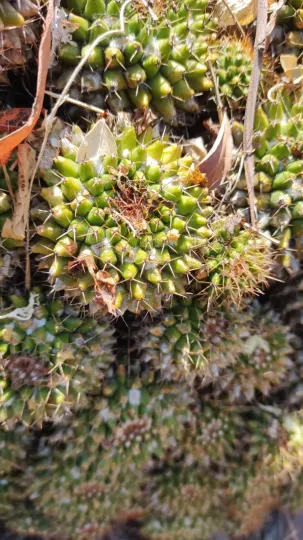
Description
Sowing dates
Propagation of Mammillaria marksiana is primarily achieved through seeds, which should be sown in early spring. The seeds are placed on a well-draining, sterile substrate consisting of fine sand and peat mix.
Maintaining a constant temperature of about 22–25 degrees Celsius is crucial for successful germination. The containers must be kept in a humid environment, typically covered with glass or plastic film to retain moisture.
Once the seedlings appear, ventilation should be gradually increased to prevent damping-off disease. Seedlings grow slowly and require intense light to develop their characteristic shape and spine structure.
Vegetative propagation is an alternative method using offshoots or pups. These are carefully removed from the mother plant and allowed to dry for several days until a callous forms at the cut site.
After callousing, the pups are placed into dry, gritty soil to encourage root development. Watering should only commence once the plantlet shows signs of active growth or has developed a stable root system.
Growing requirements
Mammillaria marksiana, a member of the Cactaceae family, is native to the arid regions of Durango, Mexico. It is a globular cactus species valued for its yellowish spines and soft, dense wool in the axils of its tubercles.
The plant thrives in full sun exposure, which is necessary to maintain its compact, globular form. In indoor settings, it should be placed in the brightest window available, ideally with southern exposure.
Soil requirements for this species focus on drainage; a standard cactus mix amended with coarse sand, perlite, or volcanic grit is essential. The pH level should ideally be slightly acidic to neutral to ensure nutrient uptake.
During the growing season, watering should be thorough but infrequent, allowing the substrate to dry out completely between applications. Overwatering is the most common cause of root rot in this species.
Winter dormancy is essential for healthy development and future flowering. During this period, the plant should be kept in a cool, dry place with temperatures between 10 and 12 degrees Celsius, and all watering should be withheld.
Main diseases and pests
The most common disease affecting this species is fungal root rot, which typically occurs due to poor drainage or excessive watering. The base of the cactus becomes soft and discolored if infected by pathogens.
Mealybugs are frequent pests that settle in the crevices between the tubercles, protected by the white wool of the cactus. They feed on plant sap and can severely stunt growth if left untreated.
Spider mites are another major threat, especially in low-humidity conditions. These tiny pests puncture the skin of the cactus, causing yellowing, scarring, and an overall decrease in the plant's health and aesthetic appeal.
Effective pest management involves regular monitoring and the use of appropriate chemical controls such as systemic insecticides when infestations are detected. Maintaining clean growing conditions helps prevent outbreaks.
Proper environmental management is the best defense against pests and diseases. Providing excellent airflow, consistent sunlight, and avoiding moisture stress allows the plant to develop natural resistance.