
Mammillaria mammillaris
Mammillaria mammillaris
Description
Growing requirements
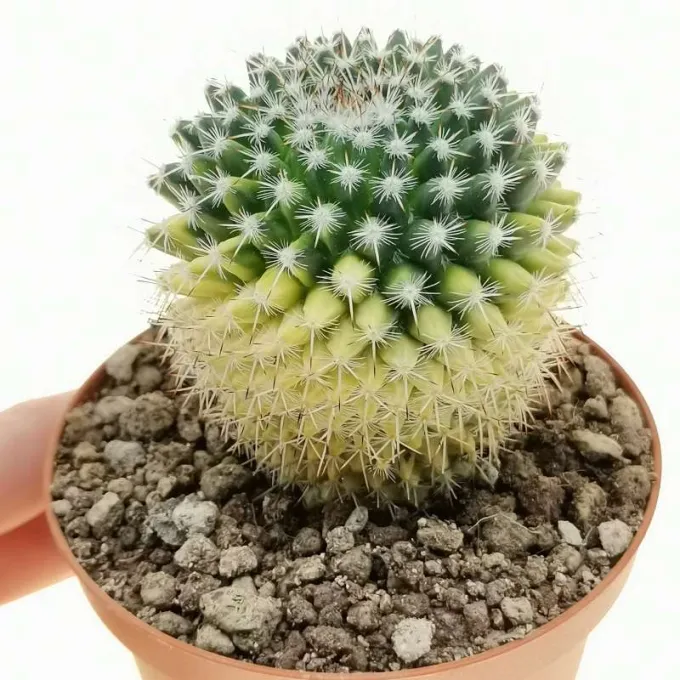
Mammillaria mammillaris is a perennial succulent species belonging to the Cactaceae family. This plant is native to the Caribbean islands, including Curacao and Aruba, where it grows in arid, rocky environments, showcasing high adaptability to nutrient-poor substrates.
The plant is defined by its globose to cylindrical stem, which is covered in prominent tubercles known as mammillae. Each tubercle features an areole from which spines emerge, a classic evolutionary trait for moisture conservation and protection in desert-like climates.
For successful cultivation, this cactus requires intense natural light. In indoor environments, placing the plant in a south-facing window or using supplemental grow lights is essential to maintain a compact, healthy shape and prevent etiolation.
The soil must be highly porous and fast-draining. A typical cactus potting mix should include inorganic components like pumice, lava rock, or coarse sand, ensuring that no water remains stagnant around the root system for extended periods.
Temperature management is vital: the plant prefers warmth during the growing season but requires a significant drop in temperature during winter dormancy to trigger natural physiological processes and future flowering cycles.
Main diseases and pests
The most common cause of decline for Mammillaria mammillaris is overwatering, which leads to root rot. Once the roots are compromised, the rot can spread rapidly to the stem, making the condition nearly impossible to reverse.
Mealybugs are the primary pest concern. These insects hide in the deep crevices between the tubercles, making them difficult to detect and eradicate without using systemic pesticides or targeted manual cleaning with isopropyl alcohol.
Spider mites can also become an issue during periods of low humidity. These microscopic pests feed on the surface of the stem, often leaving discolored patches and weakening the plant's structural integrity.
Proper air circulation is the best preventative measure against fungal outbreaks. Ensuring the plant is not kept in a stagnant, humid environment will significantly reduce the risk of mold and bacterial soft rot infections.
Regular monitoring of the stem's firmness and color is the best way to catch potential threats early. Healthy specimens are firm to the touch; softness or discoloration often indicates an underlying cultural or health issue.