
Mammillaria lasiacantha
Mammillaria lasiacantha
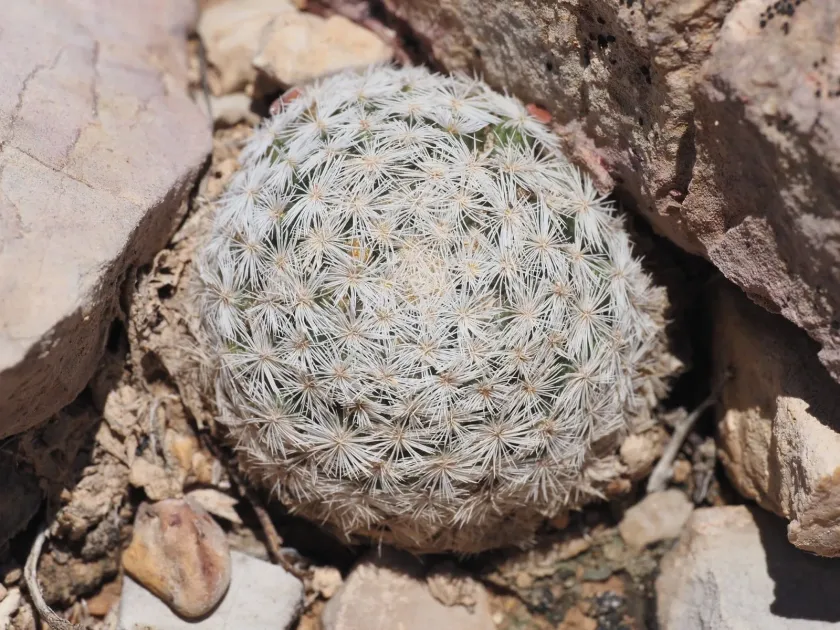
Description
Sowing dates
Sowing seeds of Mammillaria lasiacantha is best performed in early spring as daylight hours increase. Use shallow trays with drainage holes filled with a sterile, well-draining substrate composed of peat and coarse sand.
The seeds should be sown on the surface and pressed lightly into the soil; do not bury them, as they require light to germinate. Maintain a high-humidity environment by covering the tray with clear glass or plastic wrap.
Ideal temperatures for germination range between 20°C and 25°C. Seedlings typically emerge within two weeks, requiring careful monitoring to ensure that the soil remains moist but not waterlogged.
Once seedlings appear, gradually introduce fresh air by removing the cover incrementally. Transplanting into individual small pots should only occur once the cacti are robust enough and have developed their characteristic spination.
Seed propagation is the most reliable method to ensure the typical appearance of this species. Patience is required, as growth can be slow during the initial developmental stages of the plant.
Growing requirements
Mammillaria lasiacantha is a member of the Cactaceae family, native to the arid landscapes of Mexico and the Southwestern United States. This species is highly prized by collectors for its compact, globose stems covered in delicate white spines.
The plant demands high levels of bright, direct sunlight to maintain its dense spine coverage and natural shape. Without sufficient light, the plant will become etiolated and lose its distinctive, white, woolly appearance.
Soil requirements are strict: the medium must be highly porous and mineral-based. A mixture of loam, pumice, gravel, and coarse sand is ideal for providing the necessary drainage that prevents root suffocation.
During the growing season, water the plant only when the soil has completely dried out. In winter, Mammillaria lasiacantha enters a dormancy period where it should be kept cool and dry to mimic its natural environment.
Proper airflow is critical for this species. Stagnant air combined with high humidity can quickly lead to physiological stress and increase susceptibility to various environmental disorders.
Main diseases and pests
The primary threat to Mammillaria lasiacantha is overwatering, which inevitably leads to root and stem rot. Because the plant is adapted to drought, any excess moisture trapped in the soil is extremely dangerous for its delicate root structure.
Mealybugs are the most common pests, often concealing themselves among the dense spines. These insects feed on the sap and can significantly weaken the plant if not addressed with appropriate systemic insecticides.
Spider mites can also infest the plant, especially in conditions with low humidity. They cause discoloration on the skin of the cactus, leaving behind unsightly marks that persist for a long time.
Fungal infections can develop if the plant is kept in poor ventilation conditions during the dormant period. Prevention through adequate spacing and dry winter conditions is superior to attempting to treat an established infection.
Always inspect the plant regularly, especially during the spring awakening, to detect any signs of stress or pests early. Early intervention is the key to maintaining a healthy and thriving collection.