
Mammillaria karwinskiana
Mammillaria karwinskiana
Description
Growing requirements
Mammillaria karwinskiana is a notable succulent species belonging to the Cactaceae family. Native to the arid regions of central Mexico, this plant has adapted to rocky, well-draining soils and high levels of solar exposure, making it a popular subject for specialized indoor cultivation.
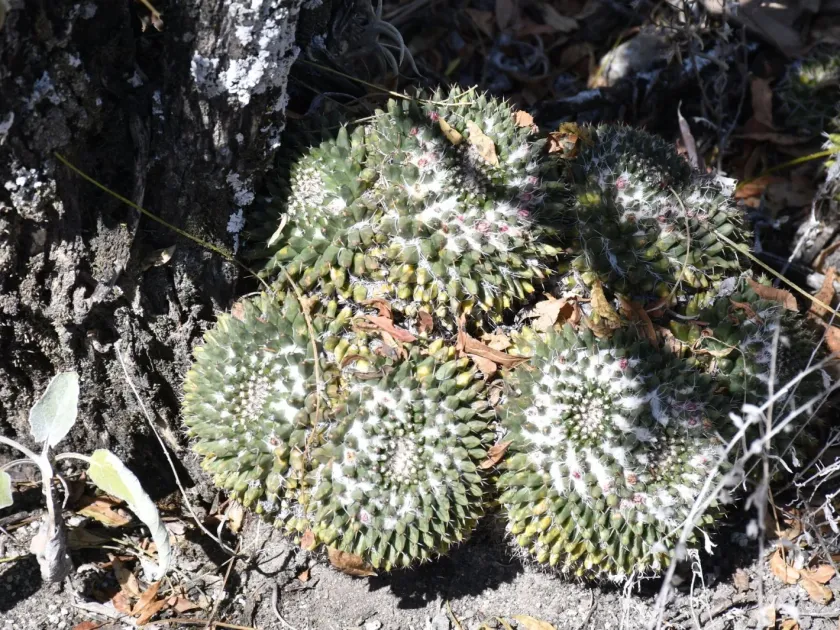
Botanically, it features a globose or short-cylindrical body covered with tubercles, which are arranged in a precise, spiral pattern. The characteristic white woolly axils between these tubercles are the sites where both new flowers and offshoots typically emerge.
Regarding climatic requirements, the plant thrives in bright, direct sunlight. Indoor growers must provide south-facing window exposure or supplement with high-intensity grow lights to ensure the cactus maintains its compact, healthy structure and robust spine development.
The substrate must be highly inorganic, mimicking the rocky soil of its natural habitat. A standard mixture should include high-quality pumice, coarse perlite, or volcanic grit, combined with a small fraction of loam. Proper drainage is the single most important factor for plant health.
Agrotechnical management requires a strict seasonal cycle. During spring and summer, regular but infrequent watering is allowed, ensuring the soil dries out completely. During the winter dormancy, water must be withheld to mimic the dry season and prepare the plant for spring flowering.
Main diseases and pests
Root rot is the most common threat to this species, typically caused by water accumulation at the root base. If the cactus appears soft or discolored at the bottom, it usually indicates that the irrigation frequency exceeds the rate of evaporation from the soil.
Mealybugs are the primary pest affecting Mammillaria species. These insects nest in the woolly axils of the tubercles, where they are protected from contact insecticides. Manual removal using a swab dipped in rubbing alcohol is an effective control method for early infestations.
Spider mites can also be problematic in environments with low humidity. These microscopic pests puncture the skin of the cactus, causing unsightly scarring and general weakening of the plant's immune system, eventually leading to stunted growth.
Fungal infections, such as those causing corky spotting or rot, often emerge during periods of prolonged dampness and poor airflow. Improving ventilation around the plant is essential to prevent spores from colonizing the epidermis of the succulent.
Mismanaged fertilization can negatively affect the plant's long-term vitality. Excessive nitrogen promotes soft, succulent growth that is highly susceptible to tissue damage and pests, which is why a low-nitrogen, potassium-rich fertilizer is recommended for healthy, firm growth.