
Mammillaria huitzilopochtli
Mammillaria huitzilopochtli
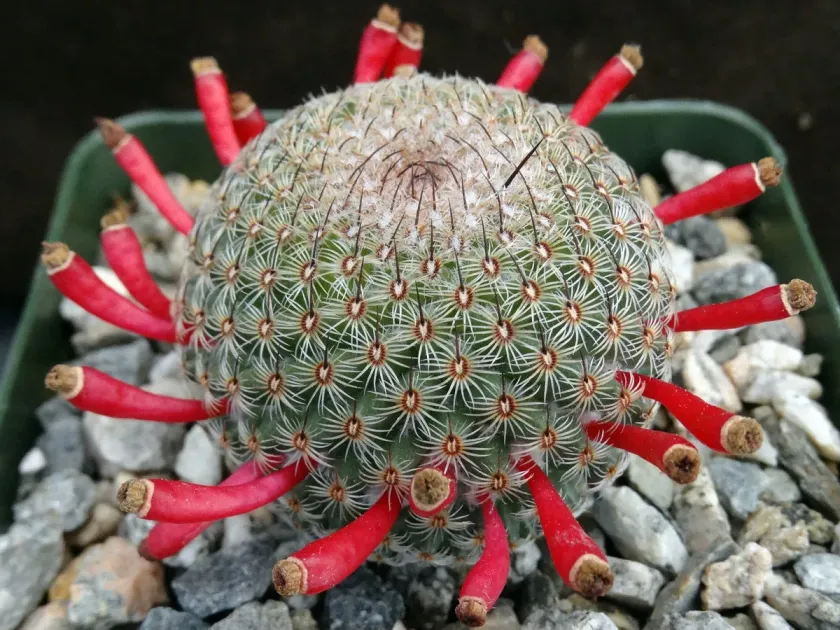
Description
Sowing dates
The propagation of Mammillaria huitzilopochtli is primarily achieved through seed cultivation. Sowing should ideally take place in the spring to capitalize on the increasing photoperiod and rising temperatures, which stimulate germination.
It is essential to use a highly porous, well-draining substrate for seeds, such as a mix of fine sand, perlite, and a small portion of peat moss. The medium must be sterilized to prevent fungal pathogens.
Seeds require a constant humidity level maintained by covering the trays with glass or plastic. Germination generally occurs within two to four weeks under stable temperatures between 22 and 26 degrees Celsius.
Seedlings remain sensitive during their first year of life. Gradual acclimatization to lower humidity is necessary once the first spines begin to develop, ensuring the small bodies do not dehydrate.
Transplanting into individual small pots should be performed only when the seedlings have become sufficiently robust, typically after the first season of growth, using a specialized mineral-rich cactus soil.
Growing requirements
Mammillaria huitzilopochtli belongs to the Cactaceae family and originates from the arid regions of Mexico. It is a slow-growing species known for its dense white spines and globular, often clumping habit.
Optimal growth requires bright, direct sunlight for most of the day. In greenhouse conditions, supplemental light may be needed to maintain the plant's characteristic dense spine structure and avoid etiolation.
The soil must be inorganic-dominant. A mixture consisting of coarse pumice, volcanic rock, and a minimal amount of organic potting soil ensures the necessary drainage to prevent root suffocation.
Watering requires strict seasonal control. During the growth phase, water should be applied only when the substrate has completely dried out. The "soak and dry" method is highly recommended.
Winter dormancy is crucial for the health of this species. Plants should be kept in a cool, dry environment (around 10 degrees Celsius) with no irrigation to prepare the plant for the next flowering cycle.
Main diseases and pests
The most significant threat to Mammillaria huitzilopochtli is overwatering, which leads to rapid decay of the root system and eventual collapse of the stem. High humidity with poor airflow is fatal.
Mealybugs are the most common pest, frequently hiding deep within the woolly areas between the tubercles. These pests suck the sap, which weakens the plant and can introduce secondary viral or fungal infections.
Spider mites can also be problematic, especially in environments with stagnant, dry air. They cause unsightly yellow or brown scarring on the plant surface, significantly reducing its aesthetic and market value.
Integrated pest management, including regular inspection and the use of targeted systemic miticides, is required. Prevention through good air circulation remains the most effective long-term strategy.
Finally, fungal spots can appear if water splashes onto the stem and remains there, especially in cooler conditions. Keeping the crown dry is vital for the longevity of this specimen.