
Mammillaria glassii
Mammillaria glassii
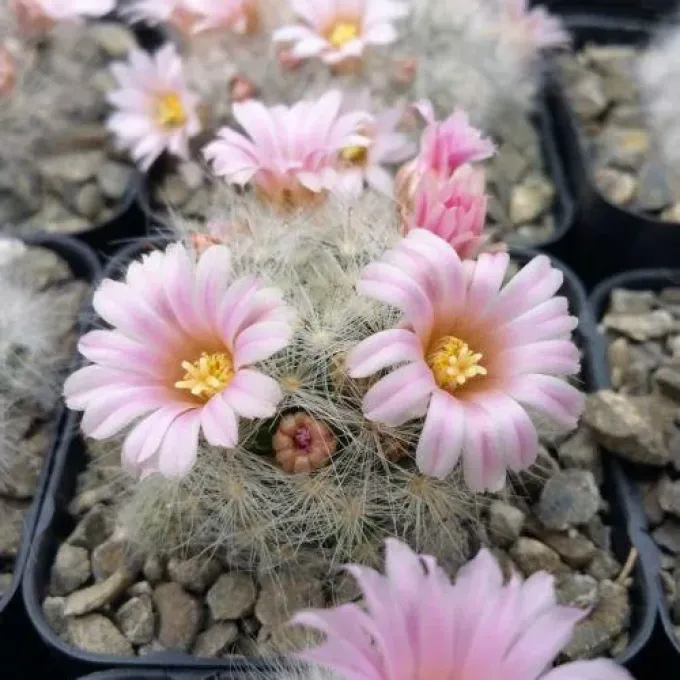
Description
Growing requirements
Mammillaria glassii is a botanical species belonging to the Cactaceae family. Native to the mountainous regions of Nuevo León, Mexico, this cactus species typically thrives on limestone cliffs, growing in small, dense clusters that adapt well to dry conditions.
To cultivate this species successfully, it requires high levels of bright, indirect sunlight. While it can handle some direct morning light, protection from harsh, direct midday sun is necessary to prevent stem bleaching and tissue damage during peak summer heat.
The substrate must be highly mineralized and porous. A standard cactus mix enriched with additional pumice, coarse sand, and crushed limestone provides the ideal drainage required to mimic its natural, craggy habitat and prevent physiological stress.
Watering should be executed according to the soak-and-dry method. During the active growth season from spring to autumn, the soil must be allowed to dry out completely between waterings. During winter dormancy, watering should be significantly reduced or suspended entirely if temperatures are kept low.
As a cultivated ornamental, Mammillaria glassii is a prized specimen for cactus enthusiasts. Its delicate, needle-like spines and miniature growth form make it an ideal choice for dish gardens, greenhouses, and specialized succulent collections where space is limited.
Main diseases and pests
The primary threats to this species are fungal root diseases, often caused by overwatering or poor ventilation. Ensuring proper air circulation around the base of the plant is vital to maintain its health throughout the growing season.
Pest management should focus on common succulent predators like mealybugs and spider mites. These pests tend to settle in the dense woolly or spiny areas of the stem, and should be treated with appropriate contact or systemic insecticides immediately upon detection.