
Mammillaria fittkaui
Mammillaria fittkaui
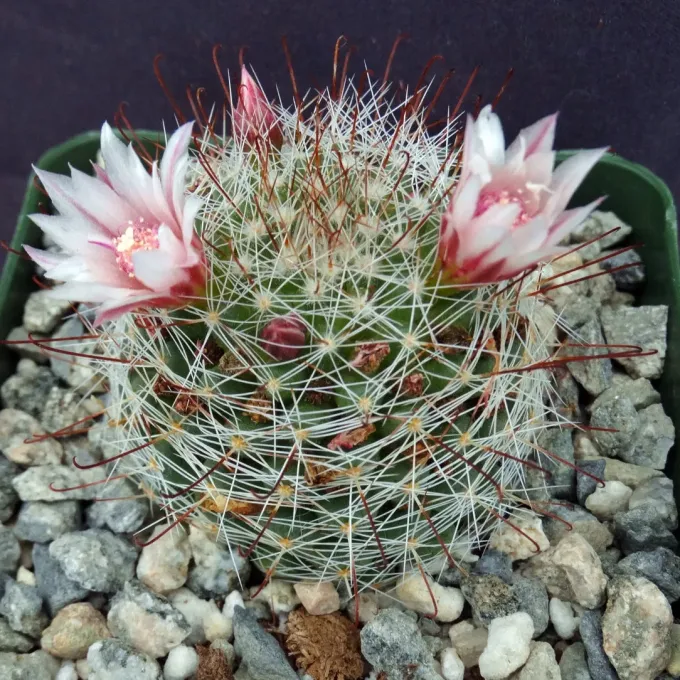
Description
Growing requirements
Mammillaria fittkaui is a fascinating succulent species belonging to the Cactaceae family. Native to the rocky terrains of Mexico, this plant has adapted to survive in environments with high drainage and minimal organic nutrient availability.
The culture requires a location with bright, direct sunlight to maintain its structural integrity and encourage the dense growth of spines. Providing insufficient light will inevitably cause the plant to etiolate, losing its compact and characteristic appearance.
Optimal soil composition is critical for this species. A well-draining mineral-based substrate containing gravel, coarse sand, and a small amount of porous material is necessary to prevent any risk of moisture retention around the root collar.
Environmental conditions should mimic its natural habitat cycles. During the active growing season, moderate temperatures and proper airflow are essential, while the dormant winter phase requires cooler temperatures to initiate the blooming process.
Watering must be performed with precision. Only hydrate the plant when the growing medium has dried out completely throughout the pot. During winter dormancy, minimize watering to prevent the stress that causes physiological damage to the root system.
Main diseases and pests
The primary concern for Mammillaria fittkaui is rot, usually resulting from excessive irrigation or inadequate drainage. Once root rot begins, the plant may quickly lose its stability and health, necessitating immediate repotting.
Pests such as mealybugs are notorious for hiding within the tubercles and under the spines, where they are protected from environmental factors. Manual removal combined with systemic treatment is usually the most effective control method.
Spider mites represent a significant threat in arid indoor conditions with poor ventilation. Regular misting (with caution) or increasing airflow can discourage mite proliferation while ensuring the plant remains clean.
Fungal infections can occur if the humidity levels remain too high or if water stays on the plant's surface for an extended period. Proper ventilation is vital to keep the plant's epidermis dry and resistant to infections.
General hygiene in the collection is the best prevention strategy. Always disinfect pots and tools when handling the plants to avoid transferring spores or pests between individual specimens.