
Mammillaria duwei
Mammillaria duwei
Description
Sowing dates
Sowing of Mammillaria duwei seeds is best performed during the spring, when the increasing day length stimulates natural germination. The optimal temperature for the germination process ranges between 20 and 25 degrees Celsius.
Use flat containers with adequate drainage, filled with a sterilized substrate rich in coarse sand. Distribute the seeds across the surface and lightly cover them with a thin layer of fine soil or vermiculite.
Maintaining consistent moisture is critical until germination, which usually occurs within 10 to 20 days. Covering the containers with clear plastic or glass helps create the necessary microclimate, though regular aeration is required to prevent mold.
Once seedlings emerge in large numbers, the cover should be gradually removed to acclimate them to ambient humidity. Pricking out young plants should be avoided until they are at least six months old to ensure they have sufficient root development.
Vegetative propagation via offsets is another common method, allowing for faster development of mature specimens that are ready to bloom during the following growing season.
Growing requirements
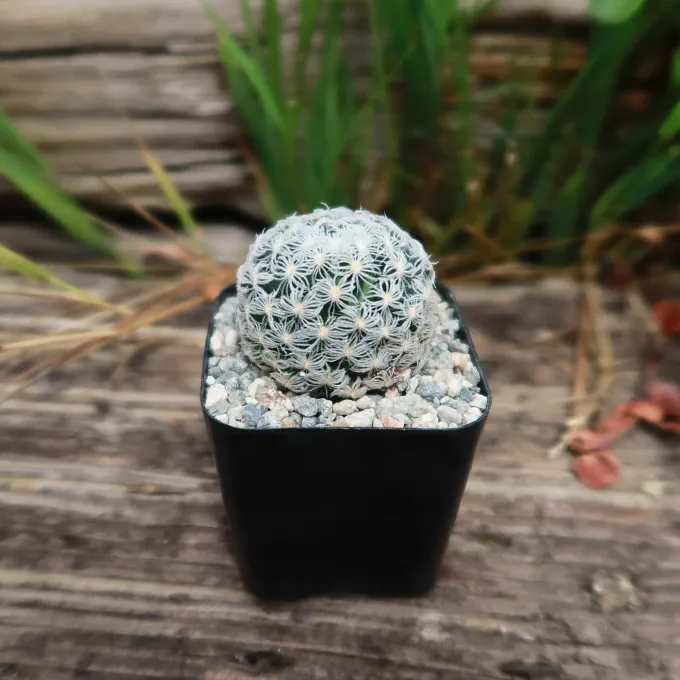
Mammillaria duwei is a member of the Cactaceae family, native exclusively to the Guanajuato state in Mexico. This plant is known for its compact, globose stem covered in soft spines, giving it a distinctively fuzzy appearance.
For healthy development, this cactus requires intense sunlight, especially during the summer months. Insufficient lighting leads to etiolation, where the stem stretches unnaturally and loses its characteristic aesthetic form.
The soil mixture must feature excellent drainage properties, as waterlogging is a primary cause of mortality for this species. A standard succulent mix amended with 30% grit or coarse sand is highly recommended.
Watering must be strictly moderate during the active growing phase and minimized during winter. It is crucial for the substrate to dry out completely between waterings to prevent basal rot of the stem.
Summer temperatures should ideally range from 22 to 28 degrees, while a dormant period in a cool spot (approx. 10–12 degrees) during winter is essential to trigger spring flowering.
Main diseases and pests
Fungal infections are the most significant threat to Mammillaria duwei, typically caused by excess moisture in the soil and poor ventilation. Root rot and stem base rot are often fatal if not caught in their early stages.
Mealybugs are the most frequent pest, often hiding deep between the tubercles of the cactus. Their presence is marked by a characteristic white, cotton-like residue appearing on the plant's surface.
Spider mites can also attack the plant, particularly in environments with low humidity and high temperatures. They leave minute puncture marks that eventually manifest as dry, corky patches on the cactus skin.
Disease prevention is achieved by strictly controlling irrigation and ensuring good airflow around the plant. Regular inspections are necessary to identify pests early, allowing for targeted use of insecticides or acaricides.
- Fusarium wilt (root rot)
- Mealybugs
- Spider mites
- Root mealybugs
- Bacterial spotting