
Mammillaria duoformis
Mammillaria duoformis
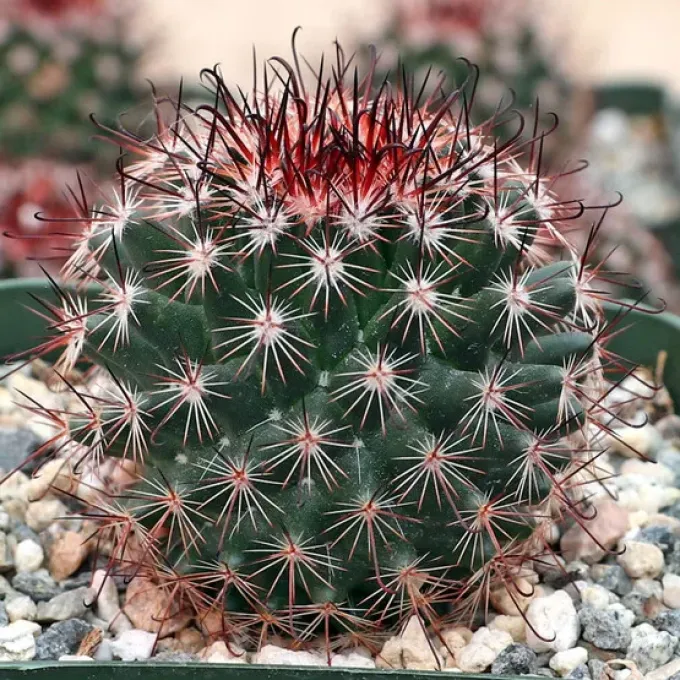
Description
Sowing dates
Propagation of this species is primarily carried out by seeds during the spring season. Seeds should be sown in a light, well-draining substrate consisting of sand and sandy loam.
Germination requires stable temperatures ranging from 20 to 25 degrees Celsius. It is crucial to maintain moderate soil moisture, as excess water during the early stages can lead to seedling rot.
After the first true spines appear, the seedlings require gradual adaptation to brighter lighting conditions. Pricking out is performed once the young cacti are strong enough and have reached about one centimeter in size.
Vegetative propagation is possible by separating the offsets that form at the base of the mother plant. This method ensures that the desirable characteristics of the parent plant are preserved.
The optimal time for cuttings is late spring or early summer when the succulent's growth activity is at its peak. Cuttings must be dried in the shade for a few days before being planted in soil.
Growing requirements
Mammillaria duoformis is a member of the Cactaceae family, native to the arid regions of Mexico. This plant prefers bright, sunny locations with plenty of direct sunlight during morning and evening hours.
The soil requirements are specific: the medium must be loose, mineral-based, and have a neutral or slightly acidic pH. A high-quality drainage layer at the bottom of the pot is essential to prevent water accumulation.
Watering must be strictly controlled; during the active growing season, water only after the soil has completely dried out. In winter, the plant enters a dormant phase and requires almost no water.
Summer temperatures should range between 22 and 30 degrees Celsius, and the plant appreciates natural day-to-night temperature fluctuations. Winter requires a cool resting period at 10–12 degrees Celsius.
Air humidity is generally not critical, but the plant dislikes stagnant air and high humidity. Good ventilation is necessary to prevent the development of physiological stress and fungal diseases.
Main diseases and pests
The primary threat to the culture is root rot, which typically occurs due to overwatering and waterlogged soil conditions. This disease manifests as tissue softening and a discoloration of the epidermis.
Pest problems are frequently caused by mealybugs, which tend to hide in the axils between the plant's tubercles. Their presence is easily identified by a white, cotton-like substance covering the plant.
Spider mites can also cause significant damage, especially in environments with low humidity and high temperatures. They feed on the succulent's juices, leaving behind unsightly rusty patches.
Systemic insecticides or acaricides are recommended for controlling these pests, targeting both the plant and the topsoil. Preventive measures include proper irrigation schedules and quarantine of new plants.
In cases of severe fungal infection, radical removal of affected areas is required, followed by treatment with fungicides. If the rot has reached the core of the plant, it is often impossible to save.