
Mammillaria dixanthocentron
Mammillaria dixanthocentron
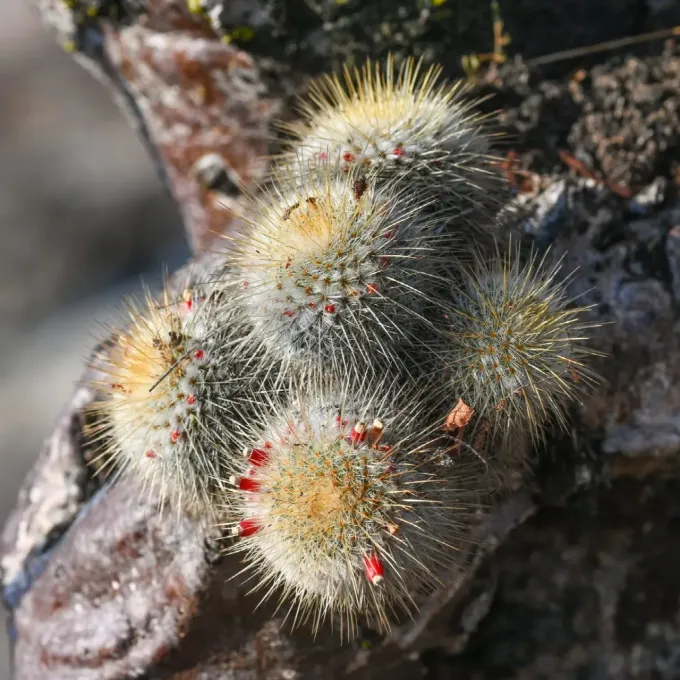
Description
Growing requirements
Mammillaria dixanthocentron is a distinguished species of the Cactaceae family, native to the arid highlands of Mexico. It is widely recognized for its cylindrical stem and dense, golden-yellow spines, which give the plant its characteristic aesthetic appeal for collectors.
The plant requires a highly porous, mineral-rich substrate to thrive in cultivation. A standard mix should include coarse sand, pumice, and minimal organic matter to ensure rapid drainage, which is crucial for preventing the roots from rotting in stagnant water.
Exposure to full, direct sunlight is essential for this species to maintain its compact growth form. During the active growing season from spring to late summer, it requires consistent heat and periodic watering, allowing the soil to dry out completely between sessions.
Winter dormancy is a critical phase for Mammillaria dixanthocentron. During this period, temperatures should be lowered significantly, and all irrigation must be ceased to simulate the natural dry season of its habitat and encourage healthy spring development.
Propagation is primarily achieved through seeds, as the plant rarely produces offsets. The seeds should be sown in a sterile, damp medium and kept under light cover until germination, followed by gradual acclimation to lower humidity levels.
Main diseases and pests
The primary agricultural threat to this species is fungal infection resulting from excessive moisture and poor soil aeration. Root rot is the most common condition leading to the sudden collapse of established plants in unprofessional conditions.
Pest management focuses on identifying and treating mealybugs and spider mites. These insects are particularly problematic in greenhouse environments where high temperatures and limited airflow favor their rapid reproduction and spread.
Chemical control involving systemic insecticides is the standard practice for severe infestations, while manual removal is effective for smaller, localized clusters. Preventive measures such as maintaining high hygiene standards are vital for plant health.
Environmental stress, such as sunburn after sudden exposure or cold damage during winter, can compromise the plant's epidermis, leaving it susceptible to secondary bacterial pathogens that quickly cause localized necrosis.
This species serves a specific niche in the ornamental horticultural market, primarily sought after by cactus enthusiasts and botanical gardens. Its cultivation requires specialized knowledge of arid-zone plant physiology to ensure long-term viability.