
Mammillaria chionocephala
Mammillaria chionocephala
Description
Sowing dates
Propagation of Mammillaria chionocephala is primarily done through seeds. This species is known for its slow growth rate, requiring patience from the grower during the initial stages.
Seeds should be sown in early spring in a sterile, well-draining substrate composed of fine sand and perlite. Maintaining a consistent temperature of approximately 25 degrees Celsius is crucial for germination.
Once seedlings emerge, they must be kept in a bright location but shielded from intense direct sunlight. Gentle ventilation is necessary to prevent the development of damp-off diseases.
Pricking out the seedlings into individual small pots should be performed only when the plants are robust enough to handle the stress of transplanting.
Young plants require very careful watering, preferably applied by spraying or from the bottom to keep the delicate stems dry.
Growing requirements
Mammillaria chionocephala belongs to the Cactaceae family and is native to the arid regions of northern Mexico. It is well-adapted to rocky substrates and limited nutrient availability.
Full sun exposure is a fundamental requirement for maintaining its dense white wool and compact spherical shape. In lower light, the plant will become etiolated and lose its decorative value.
A mineral-based soil mix is essential. Avoid high peat or compost content, as these materials retain too much moisture and increase the risk of root rot for this specific species.
Watering must follow the seasonal rhythm: regular but sparing during the growing season, and completely dry during the winter dormancy period. Proper drainage is the most critical element of its care.
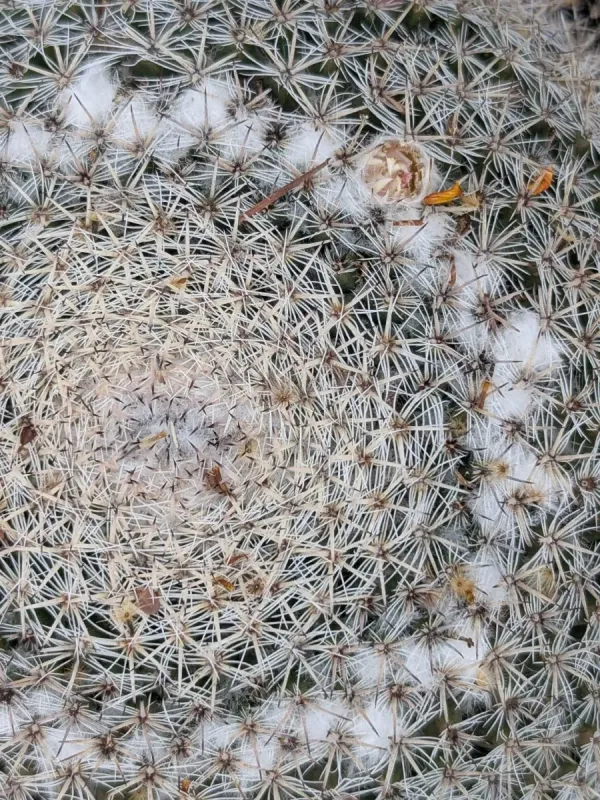
The plant is highly valued for its striking white cephalium-like appearance, which is created by dense radial spines and axillary wool, making it a favorite for collectors.
Main diseases and pests
The most common pests include mealybugs, which are notoriously difficult to remove from the dense woolly covering of the plant. Systemic insecticides are recommended for effective control.
Red spider mites often attack the plant in dry, indoor environments. These pests cause discoloration of the epidermis, often appearing as tiny yellow or brown spots.
Root rot caused by moisture stagnation is the leading cause of plant loss. If the plant becomes soft at the base, it is usually a sign of irreparable tissue damage due to fungi.
Fungal leaf spot diseases can occur if the humidity levels are too high combined with poor air circulation. Improving airflow is the best preventive measure against these pathogens.
Proper sanitation in the greenhouse or growing area, including the use of clean tools and pots, is essential to minimize the risk of pest and disease outbreaks.