
Mammillaria carmenae
Mammillaria carmenae
Description
Sowing dates
Propagation of Mammillaria carmenae is best achieved through seeds or by harvesting offsets. Sowing should take place in early spring when temperatures remain consistently above 20 degrees Celsius to ensure germination.
Use a well-draining, fine-textured substrate consisting of sand and peat. Distribute the seeds across the surface of the soil, pressing them gently without covering them completely to maintain proper light exposure.
Cover the germination containers with glass or plastic to maintain humidity levels. Ensure adequate ventilation is provided daily to prevent the development of mold, which is common in stagnant air.
Once seedlings emerge, gradually remove the cover to acclimatize them to lower humidity. Pricking out should only occur once the young plants are robust enough to handle the transition to individual pots.
Vegetative propagation via offsets is a more rapid method for producing mature plants. Allow the separated offsets to dry for several days before planting them in dry soil to prevent rot.
Growing requirements
Mammillaria carmenae is a member of the Cactaceae family, native to the high-altitude regions of Tamaulipas, Mexico. This culture is adapted to arid climates and high light intensity.
These cacti require maximum sunlight exposure throughout the day. Inadequate light results in etiolation, where the plant loses its compact shape and the density of its signature white spines decreases.
The potting medium must be porous and slightly acidic, facilitating rapid drainage. A mixture of standard cactus soil amended with coarse sand, perlite, or pumice is recommended for optimal root health.
During the growing season, provide moderate watering, allowing the soil to dry out completely between applications. In winter, maintain a period of dormancy by significantly reducing water and keeping temperatures between 10–15 degrees Celsius.
Effective drainage is the cornerstone of successful cactus cultivation. Water stagnation must be avoided at all costs, as excessive moisture leads to rapid root degradation.
Yield
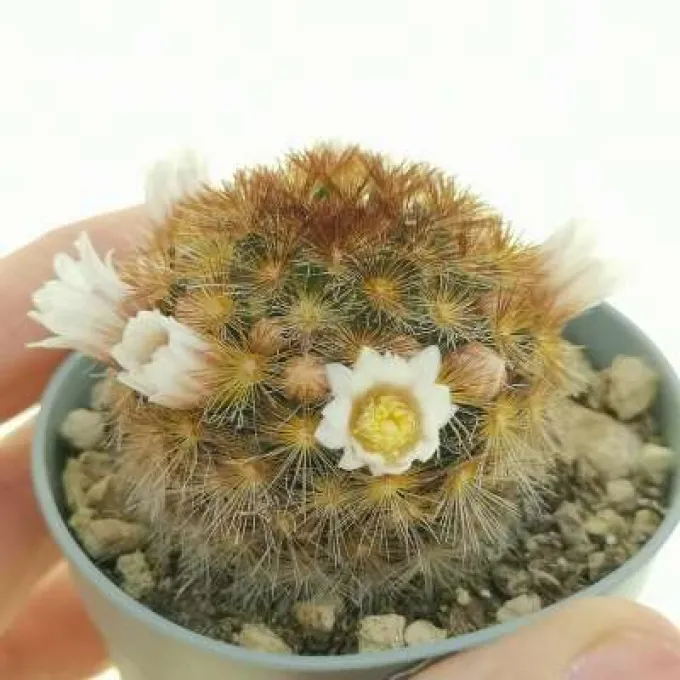
The primary use of Mammillaria carmenae is in the horticultural and hobbyist trade. It is highly prized for its miniature growth habit, dense spines, and prolific small white-pink blossoms.
A healthy mature specimen can produce several offsets per season, serving as a mother plant for sustainable production in specialized succulent nurseries.
Flowering is the primary quality indicator. When cultivated with proper winter dormancy cycles, the plant blooms reliably, which significantly enhances its commercial value and appeal to collectors.
Economic profitability is tied to the slow-growth nature of this species, making larger, well-formed clusters highly sought after by consumers and gardening centers alike.
Utilizing low-nitrogen fertilizers during the active growing season promotes spine development and structural integrity, ensuring a high-quality product for the market.
Main diseases and pests
Mealybugs are the most prevalent pest for this species, often settling in the axils between the tubercles where they extract sap and compromise plant vitality.
Spider mites can also cause damage in environments with low humidity, leaving behind faint webbing and chlorotic spots. Regular monitoring is essential for early detection.
Root rot caused by overwatering or poorly aerated soil is a fatal threat. Affected plants often require immediate repotting and the removal of necrotic roots to survive.
Fungal infections can occur if airflow is insufficient, leading to skin lesions. Maintaining good air circulation is a critical prophylactic measure in any succulent collection.
- Mealybugs
- Spider mites
- Root rot
- Fungal infections