
Sublobate crabapple
Malus sublobata
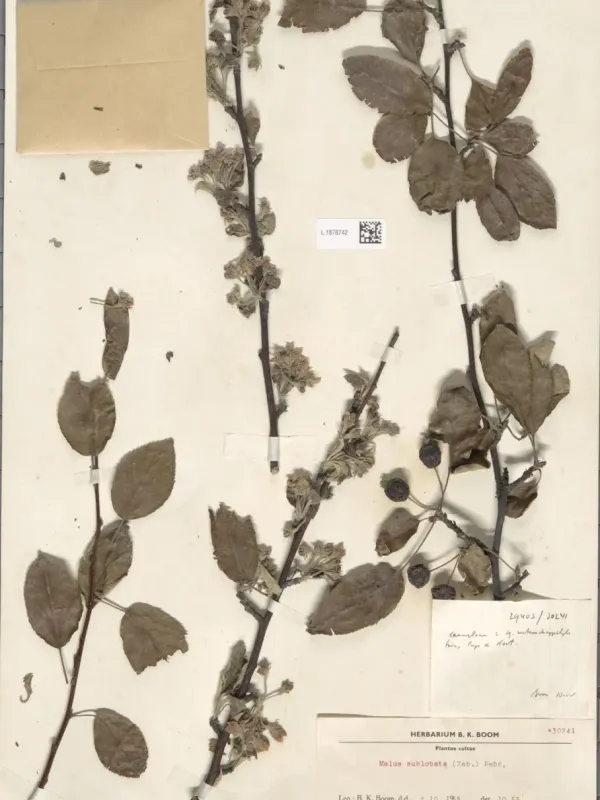
Description
Growing requirements
The sublobate crabapple (Malus sublobata) belongs to the Rosaceae family. It is a hardy species widely recognized for its ornamental value and its role in breeding programs aimed at developing disease-resistant rootstocks for modern orchards.
This species thrives in well-drained, fertile soil with a neutral to slightly acidic pH. It requires full sun exposure to ensure optimal flowering and fruit production, making it an excellent choice for open garden spaces or parks.
Cultural practices involve maintaining a consistent moisture level, especially during the first few years after planting. Mulching the root zone helps regulate temperature and suppress weed growth, which is essential for young specimens.
Pruning is usually performed in late winter or early spring to improve the structure of the canopy and remove dead wood. The tree is known for its high level of cold tolerance, which expands its cultivation range across temperate zones.
In landscape architecture, it is prized for its attractive blossoms and vibrant fruits that persist into late autumn. Beyond its beauty, the fruits are often utilized in artisanal food processing, such as creating unique jams or jellies.
Main diseases and pests
Like many members of the Malus genus, this tree can be susceptible to apple scab, particularly in humid climates. Powdery mildew can also affect foliage if there is poor air circulation within the canopy.
Common pests include the codling moth and various species of aphids that feed on young shoots. Early season monitoring is critical to preventing infestations that could affect the tree’s overall vigor.
Integrated pest management (IPM) is the recommended approach to protecting the tree. This includes the use of sticky traps, natural predators, and the careful selection of fungicides when absolutely necessary.
Maintaining a clean environment around the base of the tree is crucial. Removing leaf litter and fallen fruit prevents many soil-borne pathogens from overwintering near the tree base.
Regular fertilization with balanced nutrients ensures the tree remains robust and capable of resisting common pests. Healthy trees are significantly less likely to succumb to minor infections or insect damage.