
Arnold crabapple
Malus arnoldiana
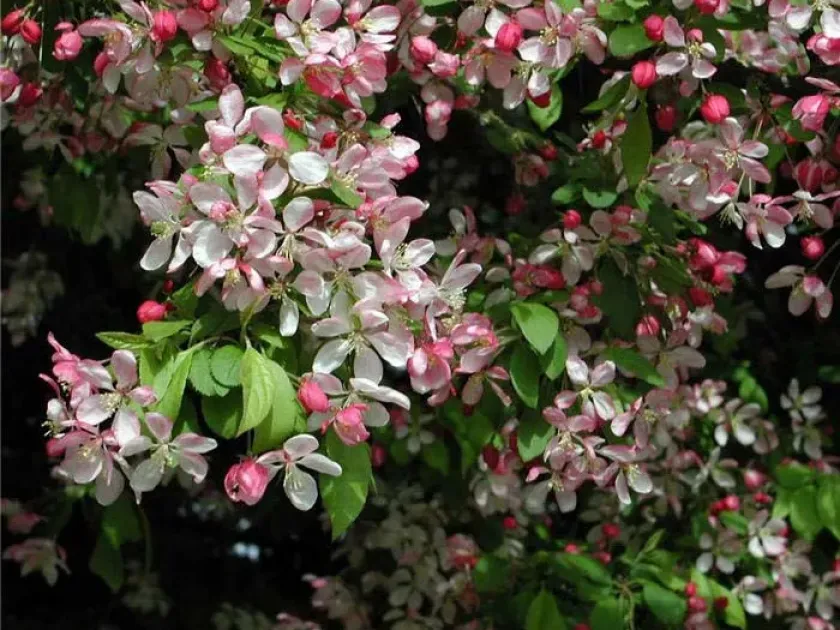
Description
Growing requirements
The Arnold crabapple, scientifically known as Malus arnoldiana, belongs to the Rosaceae family. It is a deciduous ornamental tree characterized by its elegant, spreading growth habit and long, arching branches.
This species thrives best when planted in full sun, which is essential to ensure a prolific display of its signature pale pink to white flowers in the spring season.
It prefers well-drained, fertile soil with a slightly acidic to neutral pH. Proper soil moisture management is crucial, as the tree does not tolerate prolonged waterlogging or excessive drought.
The plant exhibits excellent cold hardiness, making it a reliable choice for landscaping in temperate zones where it can withstand winter frost without extensive protection.
Routine maintenance includes occasional structural pruning to clear dead wood, as well as the application of balanced fertilizers during the growing season to support vibrant foliage.
Main diseases and pests
Apple scab remains the most prevalent fungal disease for this species, causing dark spots on leaves and premature leaf drop during cool and wet weather conditions.
Powdery mildew often appears on the leaves and young stems as a white powdery coating, which can be mitigated by ensuring proper air circulation within the canopy.
Aphids are frequent pests that congregate on new succulent growth, potentially leading to leaf curling and the development of sooty mold due to honeydew secretion.
Fire blight is a serious bacterial concern, necessitating immediate pruning of infected branches several inches below the visible symptoms to prevent further spread.
Integrated pest management, including sanitation by removing fallen leaves and dormant sprays in early spring, is highly recommended to keep the tree healthy throughout the year.