
Southern crabapple
Malus angustifolia
Description
Growing requirements
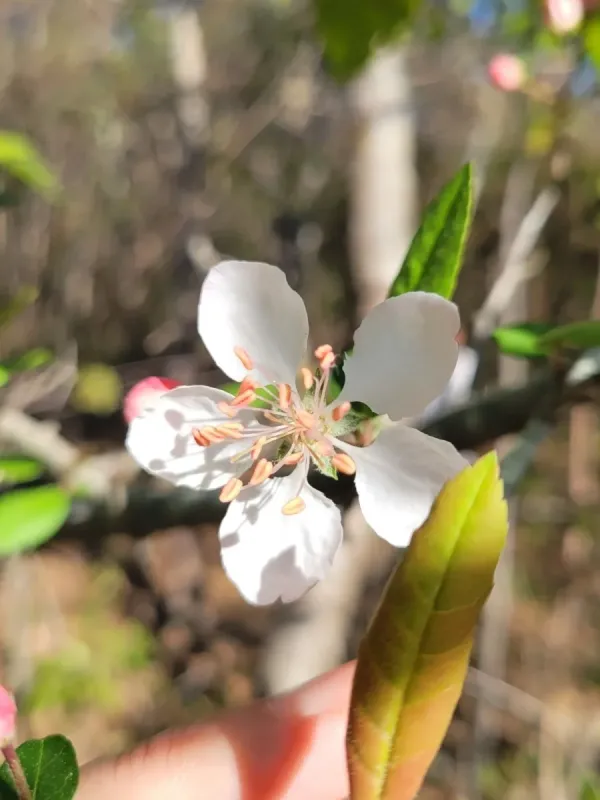
The Southern crabapple (Malus angustifolia) is a deciduous tree belonging to the Rosaceae family. It is native to the southeastern United States and is characterized by its stiff, thorny branches and aromatic, pink-white flowers that bloom in the spring.
This species thrives in full sun but can tolerate partial shade, though fruit production is maximized in direct sunlight. It prefers moist, well-drained loamy soils but displays a remarkable tolerance for various soil types including heavy clays, provided they are not waterlogged.
Regarding climate, the tree is adaptable to temperate zones. It is quite hardy, but young specimens benefit from being planted in areas sheltered from extreme wind chill, which can dry out developing buds during the transition from winter to spring.
Cultural practices should focus on maintaining soil moisture during the first few years of establishment. An annual layer of organic mulch around the base of the trunk helps suppress weeds and retains moisture, mimicking the natural woodland edge environment where these trees grow.
Pruning should be performed sparingly, mainly to remove dead or diseased wood. Because the Southern crabapple is often used for ornamental and wildlife-supporting purposes, allowing it to develop its natural, somewhat irregular form is generally preferred by gardeners.
Main diseases and pests
Fire blight is the most significant pathological threat to Malus angustifolia. This bacterial disease causes rapid wilting of shoots and leaves, appearing as if scorched by fire; affected limbs should be pruned and removed immediately to limit spread.
Various pests, including the apple aphid and the plum curculio, may infest the foliage and fruit. Integrated pest management, involving the use of horticultural oils or targeted insecticides, is recommended when pest population thresholds are exceeded.
Cedar-apple rust is another common fungal issue for this species, especially when junipers grow nearby. The fungus creates orange-yellow spots on the leaves, which can reduce the tree's photosynthetic capacity and weaken its overall vigor.
Root rot, specifically caused by Phytophthora species, can affect trees grown in poorly drained soils. Ensuring adequate soil aeration and avoiding the pile-up of mulch directly against the bark of the trunk are essential preventative measures.
Regular inspections throughout the growing season are vital for identifying early signs of distress. Keeping the area beneath the canopy clean of dropped fruit and leaves helps reduce the overwintering capacity of common pathogens and pests.