
Sikkim crabapple
Malus sikkimensis
Description
Growing requirements
The Sikkim crabapple (Malus sikkimensis) is a deciduous tree belonging to the Rosaceae family. Native to the Himalayan region, including parts of India, Bhutan, and China, it thrives in high-altitude environments. The tree typically reaches a height of 10 to 12 meters, displaying a broad, spreading canopy and distinctive brownish-gray bark that develops with age.
This species is highly adapted to cool, temperate climates with high atmospheric humidity. It performs best in fertile, well-drained loamy soils with a pH ranging from neutral to slightly acidic. In cultivation, it requires protection from extreme dry winds and benefits from consistent moisture levels in the root zone, making mulch application highly recommended for moisture retention.
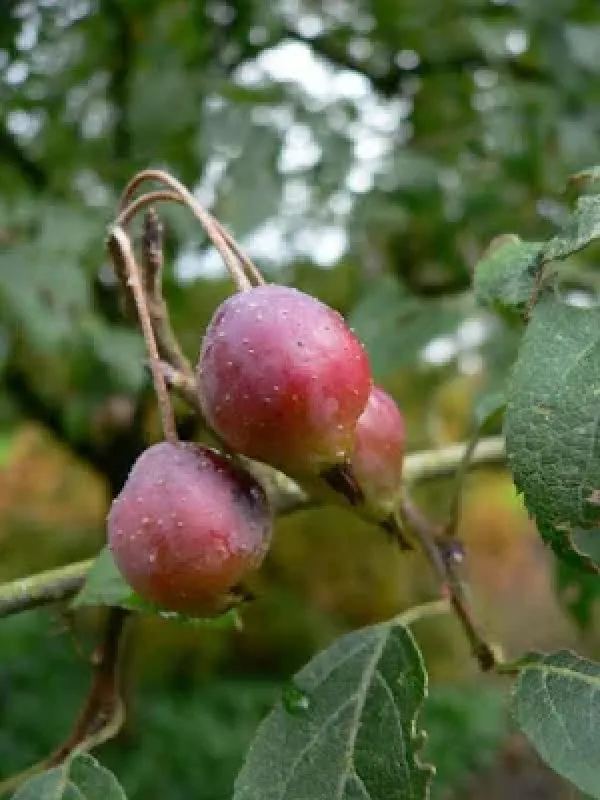
Botanically, Malus sikkimensis is recognized by its elliptic, serrated leaves and clusters of white to pale pink blossoms that appear in mid-spring. The fruits are relatively small, often brownish-red with prominent lenticels, containing numerous seeds. These fruits are not typically consumed as table fruit due to their astringent taste but are highly valued for their biological diversity.
The primary agricultural use of the Sikkim crabapple is in plant breeding and rootstock development. Due to its evolutionary history in harsh mountain climates, it possesses robust genetic resistance to several fungal diseases, including apple scab (Venturia inaequalis). Breeders cross-breed this species with domesticated varieties to impart these hardiness traits to commercial apple crops.
Cultivation practices focus on long-term structural health. Pruning should be performed during the dormant season to remove crossing branches and maintain an open canopy. The species prefers a site with full sunlight, although it can tolerate partial shade in its juvenile stages. Proper site selection is crucial to ensure the long-term vigor of the tree and its ability to withstand seasonal climatic shifts.
Main diseases and pests
The Sikkim crabapple is relatively hardy and rarely suffers from severe pest infestations. However, it can be susceptible to common apple pests such as aphids and leaf rollers. In conditions of poor air circulation and high humidity, the foliage may develop powdery mildew. Monitoring and basic horticultural hygiene are usually sufficient to manage these risks without heavy reliance on synthetic pesticides.