
Scheidecker Crabapple
Malus scheideckeri
Description
Growing requirements
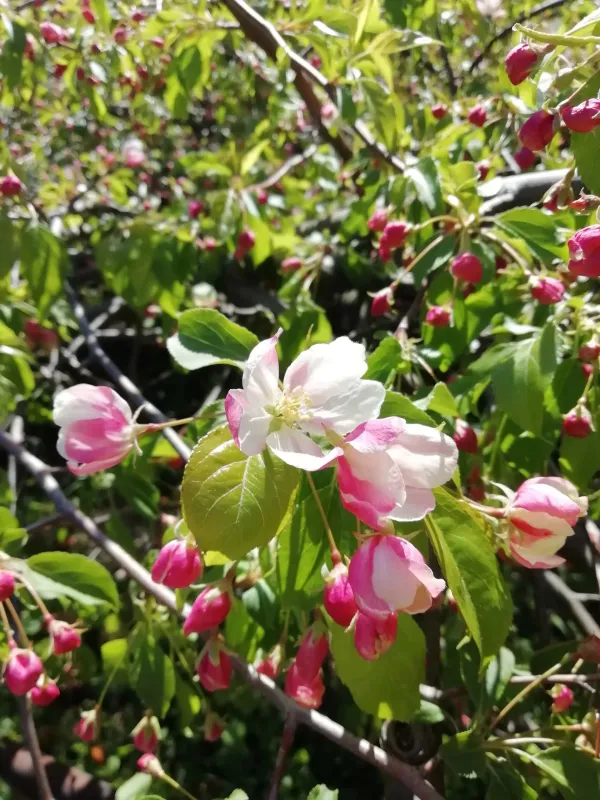
The Scheidecker Crabapple (Malus scheideckeri) is an exquisite ornamental tree belonging to the Rosaceae family. It is a well-known hybrid resulting from crossing Malus floribunda and Malus spectabilis, characterized by its stunning semi-double pink flowers.
This species thrives in well-drained, fertile soil and requires full sun exposure to maintain its vigorous growth and vibrant flowering. While it adapts to various soil types, it performs best in slightly acidic to neutral loam conditions with good aeration.
Proper water management is essential, especially during the first few years after planting. The tree prefers consistent moisture but must avoid waterlogged conditions, which can be detrimental to its root health and overall longevity.
Regular maintenance includes pruning to remove diseased, dead, or crossing branches to encourage a healthy, well-shaped canopy. This practice not only improves the aesthetics of the tree but also enhances airflow, reducing the risk of fungal infections.
Due to its high decorative value, Malus scheideckeri is extensively used in landscape design as a focal point in small gardens or as an ornamental feature in public parks. Its ability to tolerate urban conditions makes it a versatile choice for city greening.
Main diseases and pests
Scheidecker Crabapple is susceptible to common apple diseases, with scab being the most prevalent in humid climates. Preventive fungicide applications in early spring help keep the foliage and buds healthy throughout the blooming season.
Insect pests, such as aphids, spider mites, and leaf miners, can occasionally infest the tree. Frequent monitoring and the use of integrated pest management practices are recommended to minimize potential damage to the leaves and new growth.
Powdery mildew can occur during periods of high humidity and poor air circulation. Improving the plant's environment by spacing trees properly and pruning for air density is essential for preventing the spread of the pathogen.
Fire blight is another serious concern that requires vigilance. Infected branches should be pruned back well into healthy wood and sterilized tools must be used to prevent further contamination across the plant.
- Inspect for aphids in late spring.
- Apply preventative fungal treatments.
- Ensure proper spacing for airflow.
- Protect the bark from winter browsing.
- Monitor for early signs of leaf discoloration.