
Rock crabapple
Malus rockii
Description
Growing requirements
Rock crabapple (Malus rockii) belongs to the Rosaceae family. It is a wild species originating from the high-altitude mountainous regions of Southwest China, including Yunnan and Sichuan provinces. The tree is evolutionary adapted to cool, mountain climates and shows remarkable environmental resilience.
In its natural habitat, it prefers rocky, well-drained slopes. When cultivated, it demonstrates high adaptability to different soil types, including poor or rocky substrates, provided they offer good aeration and do not hold excess moisture.
The climate requirements involve sufficient sunlight for photosynthesis and cool temperatures to support healthy fruit development. The tree is exceptionally cold-hardy, which is one of its most desirable traits for northern orchards.
The root system is extensive and strong, allowing the tree to withstand winds and extract nutrients from limited soil resources. Proper care in an orchard setting involves periodic watering during drought spells and maintaining a mulch layer to protect roots.
Maintenance is straightforward as the tree requires minimal intervention. Regular pruning to remove dead wood and encourage light penetration into the canopy is sufficient to keep the tree productive and structurally sound.
Yield
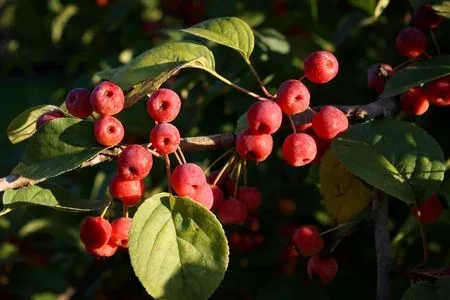
The fruit of the Rock crabapple is small and not typically consumed as a table fruit due to its astringent taste and small size. However, it is highly valued for its genetic profile, specifically for its resistance to abiotic stressors.
The primary use of Malus rockii in agriculture is its role as a rootstock. Breeding programs utilize this species to graft commercial apple varieties onto it, imparting cold resistance and drought tolerance to the resulting trees.
Yield varies based on the environment and the age of the tree, typically maturing into a reliable producer of small, hard fruits. These fruits are often harvested for research purposes or for specialized industrial processing.
The biochemical content of the fruit, including high levels of pectin and antioxidants, makes it suitable for secondary processing, such as the production of artisanal vinegar or natural fruit juices with high acidity.
By using Rock crabapple as a genetic donor, growers can produce orchards that are more sustainable. It serves as a vital tool in the quest to develop new apple varieties that can thrive in changing climates without high input costs.
Main diseases and pests
Malus rockii exhibits significant natural resistance to common apple diseases, such as apple scab and powdery mildew. This resistance makes it a highly desirable candidate for organic farming and disease-resilient breeding programs.
Pests that typically affect commercial apples, like codling moths, may occasionally target the tree, but the frequency and impact are usually lower compared to standard domestic apple varieties. Natural defenses and phytochemical composition provide protection.
Monitoring for secondary infections after mechanical damage is essential for long-term health. Using integrated pest management (IPM) practices, such as pheromone traps, can effectively mitigate any localized pest activity.
Environmental factors, such as extreme waterlogging, represent a greater threat to this species than standard pests. Ensuring that the planting site has an effective drainage system is crucial for protecting the health of the tree.
The durability of this species ensures that with minimal prophylactic measures, the tree remains vigorous and healthy for many decades. It requires significantly less chemical intervention than most other Rosaceae members.