
Pratt's crabapple
Malus prattii
Description
Growing requirements
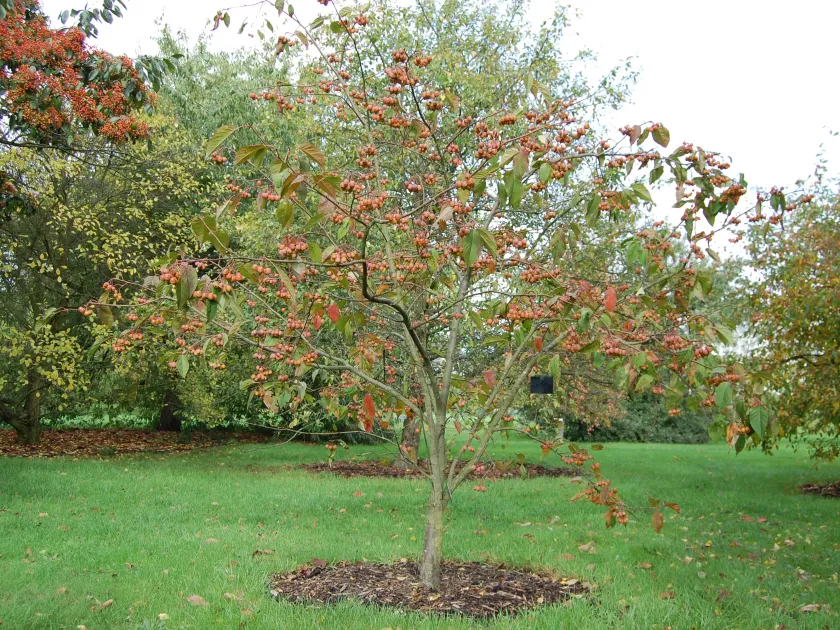
Pratt's crabapple (Malus prattii) is a deciduous tree belonging to the Rosaceae family. It is known for its elegant habit, typically reaching a height of 8 to 10 meters, and its dense, spreading crown that provides excellent shade and ornamental interest.
Originating from the mountainous regions of Western China, this species is well-adapted to cooler climates. Its natural habitat at high altitudes has endowed it with significant resilience, allowing it to withstand temperature fluctuations that would challenge less robust species.
When selecting a planting site, it is crucial to choose soil that is well-drained and nutrient-rich. While it tolerates various soil types, loamy soils with a slightly acidic to neutral pH are optimal for promoting vigorous root development and overall tree health.
Sunlight is essential for Malus prattii, which thrives best in full sun. While it may tolerate partial shade, maximum exposure ensures the best flower production in spring and promotes a denser, healthier leaf canopy throughout the growing season.
Cultural practices include regular irrigation during the first few years after planting and during prolonged dry spells. Pruning should be performed during the dormant season to maintain the tree's structure and ensure good airflow, which is critical for disease prevention.
Main diseases and pests
Like many species in the genus Malus, Pratt's crabapple can be susceptible to powdery mildew, especially in humid conditions. Keeping the tree canopy open through proper pruning is the most effective way to prevent fungal spore buildup.
Insect pests such as aphids and leaf rollers may occasionally target the foliage. Integrated pest management, including the encouragement of natural predators like ladybugs, is often sufficient to keep these populations under control without needing harsh chemicals.
Fire blight is a bacterial disease that can threaten the tree, especially during warm and wet springs. It is important to sterilize pruning tools between cuts and remove any infected branches immediately to prevent the disease from spreading to the main trunk.
Root rot is a risk if the tree is planted in heavy, waterlogged soil. Ensuring adequate drainage during the initial site preparation is the best way to safeguard the tree against soil-borne pathogens and ensure a long, healthy lifespan.
Sanitation is key to managing overall plant health. Removing fallen leaves and debris from around the base of the tree in late autumn significantly reduces the number of overwintering pathogens and pests that could attack the tree in the following season.
Harvesting
Pratt's crabapple is primarily valued as an ornamental tree in landscaping and park design. Its spring blossoms are white and fragrant, creating a stunning visual display that attracts pollinators, which is beneficial for the entire garden ecosystem.
The fruits of Malus prattii are small, globose, and often yellow or red when ripe. Unlike common orchard apple trees, these fruits are generally not intended for human consumption but serve as a vital food source for local bird populations during the late autumn.
Harvesting for decorative purposes is rarely necessary as the fruit remains on the branches for an extended period. This trait makes it an excellent choice for winter landscapes, where the colorful fruit stands out against the bare branches or evergreen backgrounds.
For those interested in propagation, seeds should be collected once the fruits have fully ripened. The seeds require a cold stratification process lasting several months to break dormancy, ensuring a high germination rate when planted in the spring.
Due to its relatively low maintenance requirements, this tree is a favorite for both public urban greening projects and private gardens. It provides year-round interest with minimal intervention, making it a sustainable choice for gardeners.