
Oriental apple
Malus orientalis
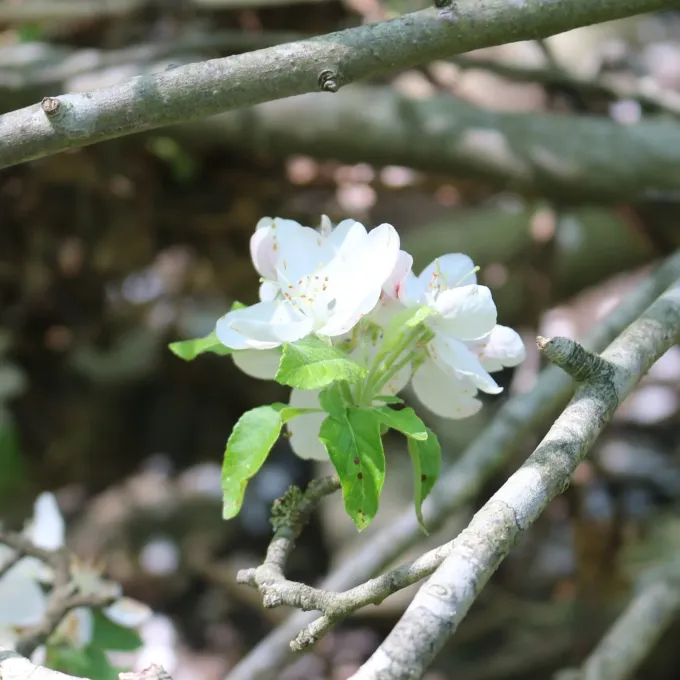
Description
Growing requirements
The Oriental apple (Malus orientalis) belongs to the Rosaceae family. It is a hardy, wild-growing tree that serves as a vital genetic resource for modern apple breeding programs.
Its natural range includes regions across the Caucasus, Asia Minor, and Northern Iran. It is primarily found in mountainous deciduous forests, thriving on slopes with excellent natural drainage.
The species requires plenty of sunlight for optimal development. While it is adaptable to various soil types, including rocky or poor soils, it performs best in well-aerated loams with a near-neutral pH balance.
Regarding climate, the plant exhibits remarkable cold hardiness and a high tolerance for drought conditions, making it an excellent candidate for cultivation in challenging environmental zones.
In agricultural practice, the Oriental apple is primarily valued as a rootstock for commercial apple cultivars, helping to confer vigor and environmental resilience to the scion.
Main diseases and pests
Apple scab (Venturia inaequalis) is the most significant disease affecting the tree, appearing during periods of high humidity and requiring consistent monitoring to prevent spread.
The codling moth remains a major pest, as its larvae burrow into the fruits, causing significant yield losses if integrated pest management strategies are not implemented.
Powdery mildew can infect young shoots during the growing season, particularly when temperature fluctuations occur, potentially causing stunted growth and leaf deformation.
Aphids and suckers are common pests that feed on young sap, weakening the tree's health and attracting secondary issues like sooty mold on the foliage.
Management of these threats relies on rigorous pruning to allow air movement through the canopy, removing debris to reduce pathogen overwintering, and applying targeted organic treatments.