
Moerlands apple
Malus moerlandsii
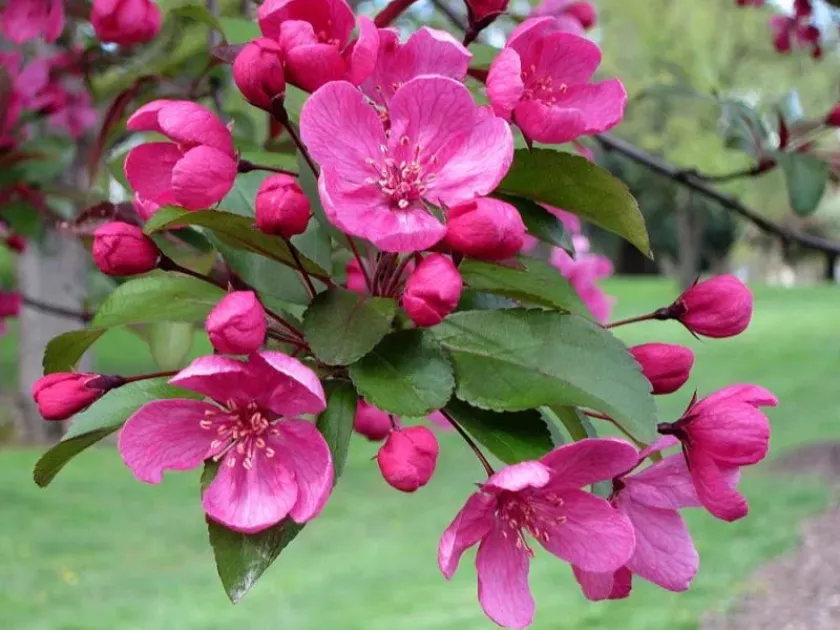
Description
Growing requirements
Moerlands apple belongs to the Rosaceae family. It is primarily recognized as a highly decorative species, valued for its ornamental form and aesthetic appeal in gardens.
This tree performs best when planted in locations that receive full sun exposure, which is crucial for maintaining the plant's vibrant foliage and ensuring healthy blooming.
The soil should be fertile, well-draining, and slightly acidic to neutral to provide the necessary nutrients for robust growth throughout the growing season.
Climate tolerance is a key feature of this species, as it is well-adapted to temperate regions and can withstand typical fluctuations in local weather conditions.
Regular maintenance including pruning for shape and health, along with balanced fertilization, is essential to keep the tree in an optimal state for landscaping.
Main diseases and pests
The main health concerns for this species include apple scab and powdery mildew, which can become problematic during periods of high humidity and poor air circulation.
Insects like aphids and leaf miners are common pests that may affect the foliage, leading to a decline in the tree's ornamental value if left uncontrolled.
Integrated pest management, including the use of systemic fungicides and environmentally safe insecticides, is recommended to mitigate these issues effectively.
It is important to prune away dead or infected branches periodically to reduce the inoculum levels and prevent the spread of fungal spores within the canopy.
Maintaining a clean garden environment by removing fallen debris around the tree base helps prevent pests and diseases from overwintering in the soil.