
Hybrid apple varieties
Malus hybrids
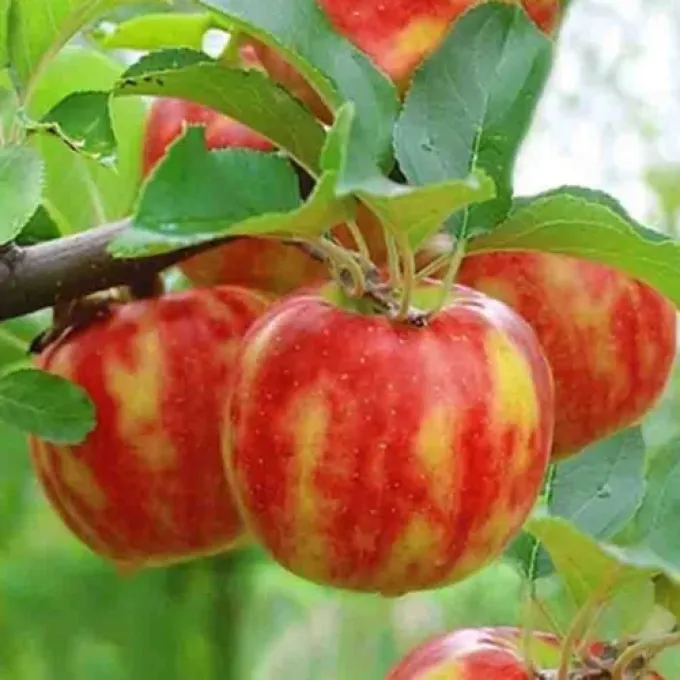
Description
Sowing dates
Planting hybrid apple trees is best performed during the dormant season, typically in early spring or late autumn. Spring planting is preferred in areas with harsh winters to ensure the root system establishes before the next frost.
Before planting, the soil should be prepared by incorporating compost or well-rotted manure into the planting hole. This provides essential nutrients and improves soil structure for better root penetration.
When selecting a site, it is crucial to consider sunlight exposure, as apple trees require at least six to eight hours of direct sun daily. Proper spacing ensures adequate air circulation to prevent foliage diseases.
For large orchards, trees should be planted in rows aligned to optimize sunlight distribution. Using dwarfing rootstocks allows for higher tree density, which simplifies management and harvesting processes.
After planting, the trees require immediate watering to eliminate air pockets around the roots and settle the soil. Consistent monitoring during the first year is vital for successful establishment.
Growing requirements
Hybrid apple trees (family Rosaceae) perform best in well-drained, fertile soil with a slightly acidic to neutral pH. They are sensitive to waterlogging, which can easily lead to root rot.
Adequate water is essential, particularly during the critical fruit-swelling stages. Drip irrigation systems are highly recommended to deliver precise moisture levels directly to the root zone.
Climate adaptation is a key feature of modern hybrids, but most require a certain number of chilling hours during winter to trigger normal spring blossoming and vegetative growth.
Nutrient management involves applying fertilizers based on soil tests. A balanced supply of nitrogen, phosphorus, and potassium supports both canopy growth and fruit development.
- Regular annual pruning.
- Mulching to retain soil moisture.
- Protection from extreme wind.
- Monitoring soil nutrient levels.
Yield
Hybrid apple varieties are bred for high productivity and fruit quality. Modern intensive orchards, utilizing advanced pruning and thinning techniques, can produce significant yields per hectare.
Early fruit production is a major advantage of modern hybrids, often bearing crops within the first few years after planting. This accelerated yield profile is ideal for commercial orchards.
Thinning the fruitlets in late spring is a crucial practice. It ensures that the remaining fruit reaches optimal size and prevents the tree from becoming biennial in its bearing habits.
Proper canopy management ensures sunlight reaches all parts of the tree, which is essential for uniform fruit coloring and sugar accumulation, both key factors in market value.
Strategic management of the orchard environment allows growers to maintain high yields consistently over the productive lifespan of the apple trees.
Main diseases and pests
Apple scab is one of the most significant fungal diseases affecting Malus hybrids. It causes lesions on both fruit and leaves, potentially ruining the commercial viability of the crop.
Powdery mildew is another common issue that manifests as a white, dusty layer on young shoots. Pruning out infected wood and using appropriate fungicides help maintain tree health.
The codling moth remains a major pest, as its larvae burrow into the fruit. Integrated pest management (IPM), including pheromone traps and biological controls, is highly effective.
Aphids and mites can weaken young trees by feeding on sap. Early detection and treatment are necessary to prevent infestations that lead to stunted growth and reduced vigor.
Sanitation practices, such as removing fallen leaves and mummified fruit, are essential for reducing the pressure of diseases and pests in the orchard environment.
Harvesting
Harvesting should be timed based on fruit maturity markers such as flesh firmness, color changes, and ease of detachment. Proper timing is critical for maximizing shelf life.
Careful picking is required to avoid bruising or skin damage. Even minor injuries to the fruit can lead to decay during storage, significantly reducing the marketable yield.
Post-harvest handling involves cooling the fruit rapidly to near-freezing temperatures. This slows down respiration rates and maintains the crisp texture and quality of the apples.
Grading and sorting allow growers to categorize fruit based on size and quality standards. This process ensures that premium produce is separated for high-value markets.
Long-term storage requires controlled atmosphere conditions, which effectively maintain fruit quality for several months, allowing for a steady market supply throughout the year.