
Honan crabapple
Malus honanensis
Description
Growing requirements
The Honan crabapple (Malus honanensis) is a distinct species of deciduous tree belonging to the Rosaceae family. Native to the mountainous regions of central and western China, it has evolved to thrive in diverse forest ecosystems, showing strong adaptability to various temperate climates.
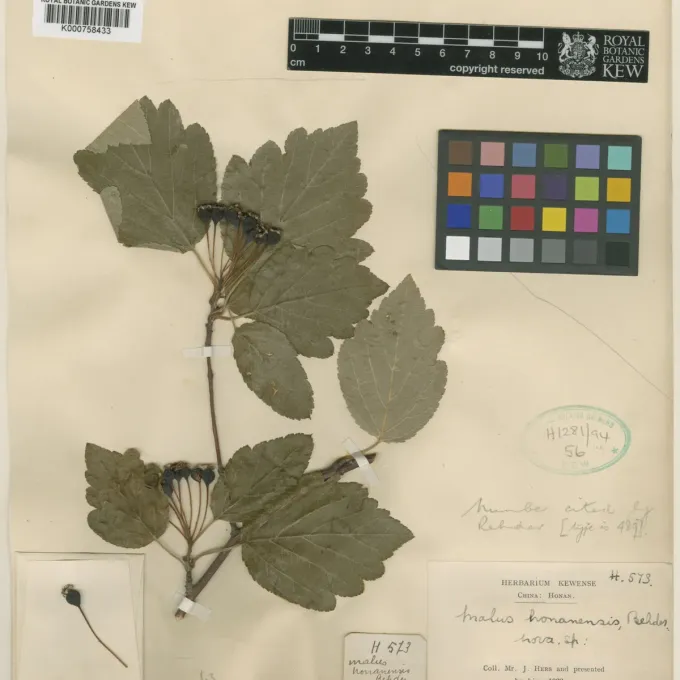
Botanically, this species is noted for its attractive foliage, which often features serrated or lobed margins, setting it apart from more common apple varieties. The tree typically reaches a height of several meters, developing a spreading, rounded crown that provides excellent shade in landscape settings.
Regarding site requirements, Malus honanensis prefers well-drained, fertile soil with a slightly acidic to neutral pH level. It performs best in full sun, which encourages both healthy growth and a more abundant production of small, decorative pomes that persist well into the late autumn months.
Good agricultural practices for this tree involve maintaining a clear space around the trunk, free of weeds, which helps the tree receive adequate nutrients. While established trees are quite hardy, supplemental watering during the first few years of development is crucial for establishing a robust root system.
In terms of хозяйственное (utility) use, the Honan crabapple is primarily valued as an ornamental specimen in temperate gardens. Due to its genetic resilience, it is also utilized in agricultural research as a potential rootstock to improve the winter hardiness of commercial apple cultivars.
Main diseases and pests
Like many species in the genus Malus, the Honan crabapple can be susceptible to common fungal diseases, particularly apple scab. This condition, characterized by dark spots on the leaves and fruit, can be managed by ensuring good airflow and applying dormant season fungicides if necessary.
Pests such as aphids and spider mites are potential threats, particularly during warm, dry spells. These insects feed on the sap of young shoots, causing leaf curling and reduced vitality. Regular scouting and the use of natural predators or organic sprays are effective mitigation strategies.
Fire blight is a serious bacterial disease that can affect many Rosaceae members. Although Malus honanensis possesses some natural resistance, strict sanitation practices, such as disinfecting pruning tools after each cut, are essential to prevent the spread of the pathogen within the orchard.
During the winter, vole and rabbit damage to the bark at the base of the tree is a common occurrence. To protect young trees, it is advisable to use hardware cloth or tree guards, ensuring they are tall enough to remain effective even if there is significant snow cover.
Overall plant health is best maintained through consistent pruning to remove dead or diseased wood. This practice not only improves the structural integrity of the tree but also discourages the colonization of wood-boring insects, helping the tree remain vigorous throughout its long lifespan.