
Hall crabapple
Malus halliana
Description
Growing requirements
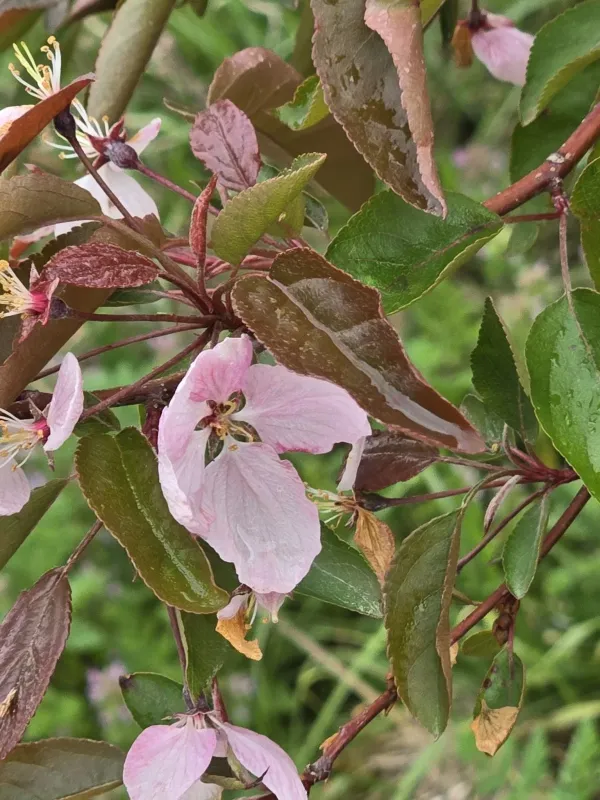
The Hall crabapple (Malus halliana) is a decorative species belonging to the Rosaceae family. Originally native to China and Japan, this tree is widely valued in horticulture for its elegant growth habit and profuse, delicate pink blossoms that appear in mid-spring.
Botanically, it is recognized by its arching branches and glossy, oval leaves that turn vibrant shades in the autumn. The tree is generally small to medium-sized, making it an ideal candidate for residential landscapes and urban parks where space is a consideration.
The species thrives in well-drained, fertile soil with a slightly acidic to neutral pH level. It performs best in locations that provide full sun exposure, although it can tolerate light shade during the hottest parts of the day in warmer climates.
Climate adaptability is a significant trait of Malus halliana, as it handles a variety of moderate temperature zones quite effectively. However, it requires a period of winter dormancy to bloom successfully, and young trees should be protected from extreme frost.
Maintenance practices involve regular pruning to shape the canopy and maintain a clear structure. Adequate spacing during planting is essential to ensure proper air circulation, which helps maintain plant vigor and prevents the accumulation of humidity near the trunk.
Main diseases and pests
The Hall crabapple is susceptible to common Rosaceae diseases, with apple scab and powdery mildew being the most prevalent. Monitoring the foliage during periods of high humidity is critical for early detection and mitigation of these fungal pathogens.
Common insect pests include aphids and mites, which primarily target new growth during the spring flush. Implementing an integrated pest management strategy, including the use of dormant oils or soap sprays, is typically sufficient to keep the tree healthy.