
Pacific crabapple
Malus fusca
Description
Growing requirements
The Pacific crabapple (Malus fusca), also known as the Oregon crabapple, is a member of the Rosaceae family. It is a resilient native species distributed along the Pacific coast of North America, ranging from Alaska to Northern California.
The species thrives in moist environments, such as river banks, swamp edges, and damp forest clearings. It possesses a remarkable tolerance for various soil types, including heavy clays and waterlogged areas where other fruit trees might struggle.
In terms of climate, the Pacific crabapple prefers a maritime environment with mild, wet winters and cool, humid summers. It can grow in full sun or partial shade, making it a versatile plant for various landscape designs and ecological restoration projects.
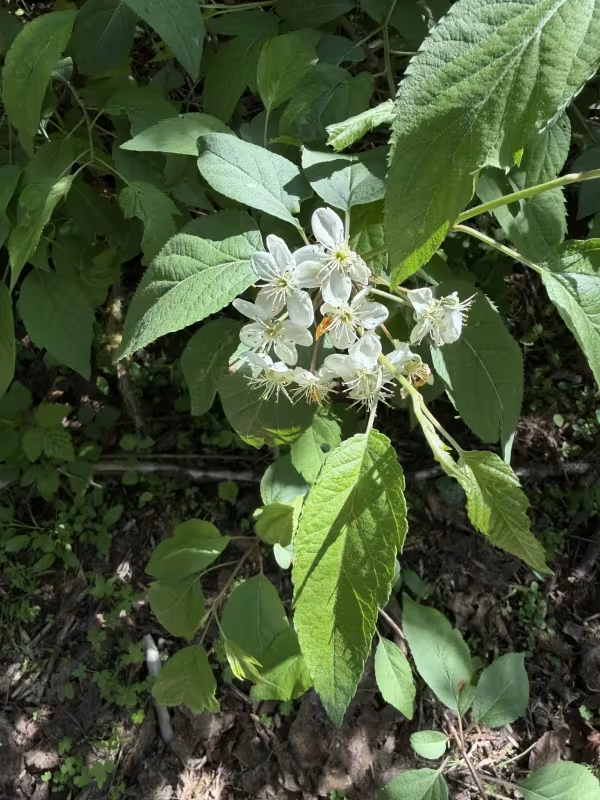
Botanically, it is a deciduous tree or large shrub that can grow up to 12 meters in height. Its leaves are simple and ovate, sometimes lobed, which distinguishes this species from many common apple varieties. The bark is typically thin and scaly, and the branches often have thorns.
Cultivation of this species requires minimal maintenance once established. It is naturally adapted to its environment, so regular irrigation is only necessary during the first years of growth or in unusually dry seasons. It does not demand heavy fertilizing, thriving in native soil conditions.
Yield
The fruit of the Pacific crabapple is a small, elongated or round pome, typically measuring about 1–2 cm in diameter. When ripe, they range from yellow-green to brownish-red in color, often with a pleasant, albeit tart, fragrance.
While the fruits are edible, they are highly acidic and astringent, containing significant amounts of tannins and pectin. These qualities make them excellent for processing into jellies, preserves, and cider, rather than for fresh consumption.
The yields are highly dependent on the tree's health, pollination success, and annual rainfall. Historically, these fruits were an important food source for indigenous peoples in the Pacific Northwest, who developed various methods to process and store them.
From an agricultural standpoint, this species serves as a valuable genetic resource for breeding programs focused on cold hardiness and wet-soil tolerance. It is also an important plant for wildlife, providing essential food for birds and small mammals.
Harvesting usually occurs in late summer or autumn when the fruits have softened. Although the size of the fruit makes hand-picking labor-intensive, the high pectin content ensures a successful set in jams and jellies without the need for synthetic additives.
Main diseases and pests
Despite its inherent hardiness, the Pacific crabapple is susceptible to common apple diseases, such as apple scab (Venturia inaequalis). This fungal pathogen thrives in wet, temperate conditions and can affect both foliage and fruit quality.
Powdery mildew is another potential issue, especially during springs with fluctuating temperatures and high humidity. Proper tree spacing and regular pruning are essential to promote airflow and minimize the risk of infection within the canopy.
Insect pests such as leaf miners and aphids can occasionally damage young foliage. However, in a healthy ecosystem, natural predators usually keep these pest populations in check, preventing widespread damage to the trees.
Root rot can occur if the trees are planted in sites that combine high temperatures with stagnant water. While the species loves moisture, soil drainage remains an important factor to ensure the long-term health of the root system.
Integrated pest management, including the removal of infected wood and the maintenance of a clean area around the base of the tree, is generally sufficient for disease control. The use of chemical fungicides is rarely required for this wild species.