
Climbing Fern
Lygodium venustum
Description
Growing requirements
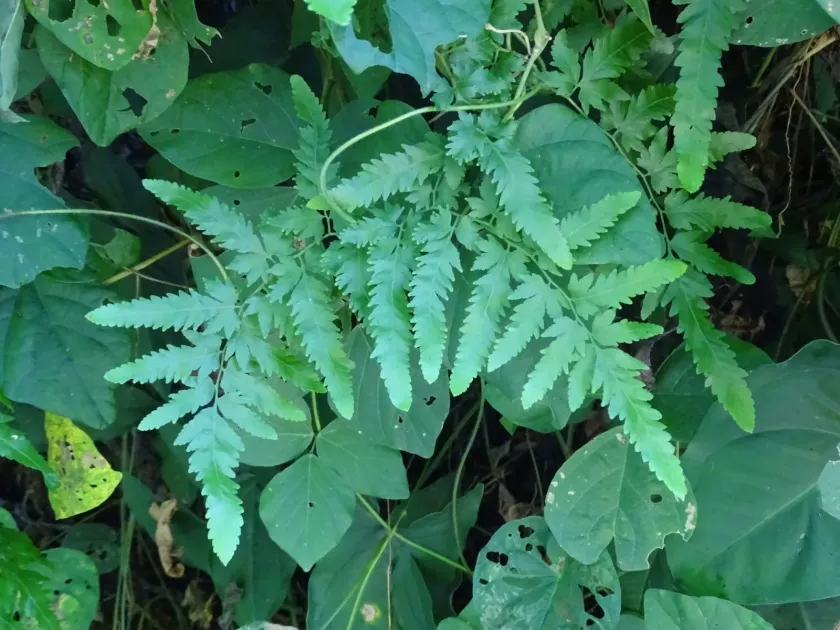
The climbing fern (Lygodium venustum) belongs to the Lygodiaceae family and is recognized for its distinctive climbing habit. Unlike typical ferns, its fronds are essentially indeterminate, continuing to grow and twine around supports, which allows it to reach impressive lengths in favorable environments.
The species is native to tropical and subtropical regions of the Americas. Its natural habitat is characterized by high precipitation, shaded forest understories, and consistently warm temperatures, which must be replicated to maintain plant vigor in a cultivation setting.
Optimal growth requires high ambient humidity and consistently moist, but not waterlogged, soil. Providing a stable microclimate is crucial, as the plant is sensitive to desiccation and drastic temperature fluctuations that can damage its delicate, trailing foliage.
The ideal growing medium should be porous, rich in organic matter, and slightly acidic. A mix consisting of peat moss, pine bark, and perlite provides the necessary drainage and aeration for healthy root system development, which is paramount for this tropical fern.
In terms of economic and practical use, Lygodium venustum is highly valued in the horticultural industry for ornamental purposes. It is extensively used in greenhouses, conservatories, and interior landscaping for its ability to create lush, vertical greenery in limited spaces.
Main diseases and pests
The primary pests affecting climbing ferns include spider mites, which thrive in low-humidity environments, and scale insects that feed on the sap of the stems, causing stunted growth and chlorosis.
Pathogenic threats mainly involve fungal infections such as root rot, often induced by poor drainage or excessive irrigation practices that inhibit oxygen flow to the rhizomes and root system.