
Japanese climbing fern
Lygodium japonicum
Description
Growing requirements
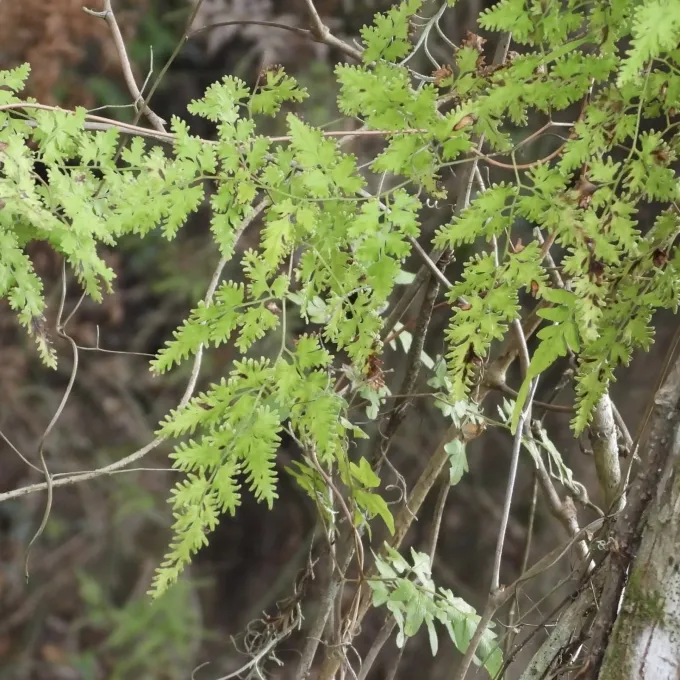
The Japanese climbing fern (Lygodium japonicum) is a distinctive perennial climbing fern species within the Lygodiaceae family. Unlike typical rosette-forming ferns, this plant develops elongated rachises that act as vines, allowing it to climb vegetation or structures in its natural habitat.
Native to East Asia, including Japan and China, this fern thrives in humid, shaded environments such as forest margins and riparian zones. Its natural distribution demonstrates a high preference for stable, moist environments with moderate ambient temperatures throughout the growing season.
Successful cultivation requires a climate that mimics its tropical to subtropical origins. The plant prefers bright, indirect light, as direct sunlight can easily dehydrate its delicate fronds. A consistent temperature range between 18°C and 25°C is ideal for maintaining continuous growth.
Soil requirements involve a well-drained, acidic, and organic-rich medium. A blend of peat moss, perlite, and leaf mold provides the necessary aeration and moisture retention. Proper drainage is essential, as the roots are sensitive to waterlogging and can quickly develop rot in stagnant conditions.
In practice, Lygodium japonicum is utilized mainly as an ornamental specimen in conservatory settings and high-end interior landscaping. Its ability to cover vertical trellises makes it a unique choice for greenhouse design where space and humidity can be strictly managed.
Main diseases and pests
Common pests affecting this species include spider mites, mealybugs, and scale insects, which often thrive in indoor conditions with poor airflow. Regular monitoring of the foliage and periodic misting can help prevent infestations before they escalate.
Disease management focuses primarily on preventing fungal infections such as root rot caused by overwatering. Ensuring the substrate does not stay saturated and providing adequate ventilation around the base of the plant are critical steps in keeping the specimen healthy.