
Old World climbing fern
Lygodium microphyllum
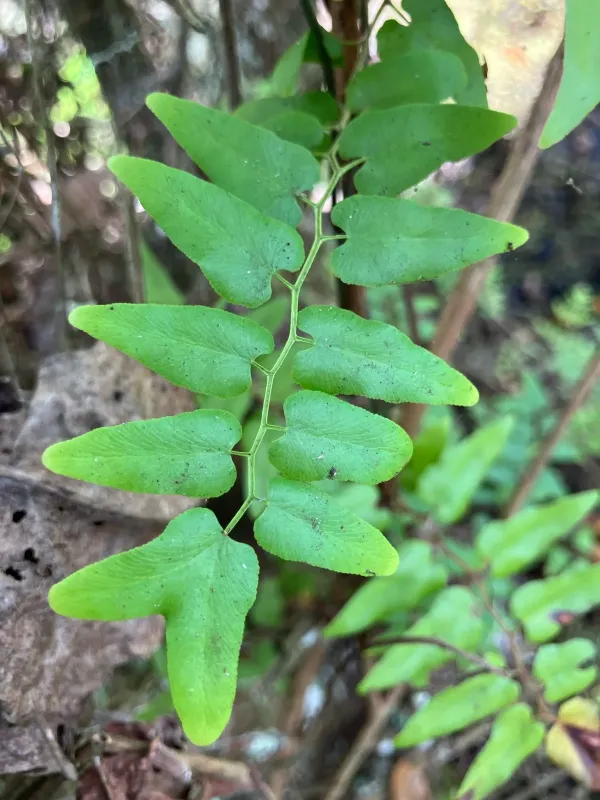
Description
Growing requirements
Lygodium microphyllum is a perennial climbing fern species within the Lygodiaceae family. Known for its rampant growth, this plant uses its rachis to climb over shrubs and trees, eventually forming thick mats that can dominate entire forest canopies.
Its native range encompasses tropical regions across Africa, Asia, and Australia. In these regions, it exists as a component of the local ecosystem, whereas in introduced regions, it behaves as a severe environmental weed.
The plant requires high humidity, ample moisture, and warm temperatures for optimal development. It thrives in wetland areas, cypress swamps, and along riparian corridors, where light and water are abundant.
Soil requirements are relatively flexible, though the fern thrives in acidic, organic-rich, and damp soil conditions. It possesses a rhizomatous root system that facilitates vegetative spread, making it resilient to minor environmental fluctuations.
From an agricultural standpoint, it is classified as a noxious weed rather than a crop. It causes significant economic damage to silviculture by smothering young trees and making prescribed burning operations extremely dangerous for forestry management.
Main diseases and pests
Biological control represents the most promising management strategy against the Old World climbing fern. Several insects, such as the moth Cataclysta camptozonale, have been identified as effective agents that feed specifically on the fern in its native habitat.
Various fungal pathogens have also been studied for their potential to damage the fern’s foliage and stems. While promising in laboratory settings, their application in the field is governed by rigorous ecological safety standards.
Mechanical management is difficult due to the fragility of the spores and the plant's ability to regrow from small rhizome fragments. Cutting the vines provides temporary relief but does not eliminate the root system, leading to rapid re-sprouting.
Fire danger remains a critical threat, as the fern acts as a ladder fuel. By carrying fire into the canopy, it causes severe damage to native trees that are not adapted to withstand high-intensity crown fires.
Integrated Pest Management (IPM) programs currently combine targeted herbicide applications with the release of biological control agents. These multifaceted approaches aim to reduce the plant's competitive advantage in sensitive wetlands.