
Climbing fern
Lygodium palmatum
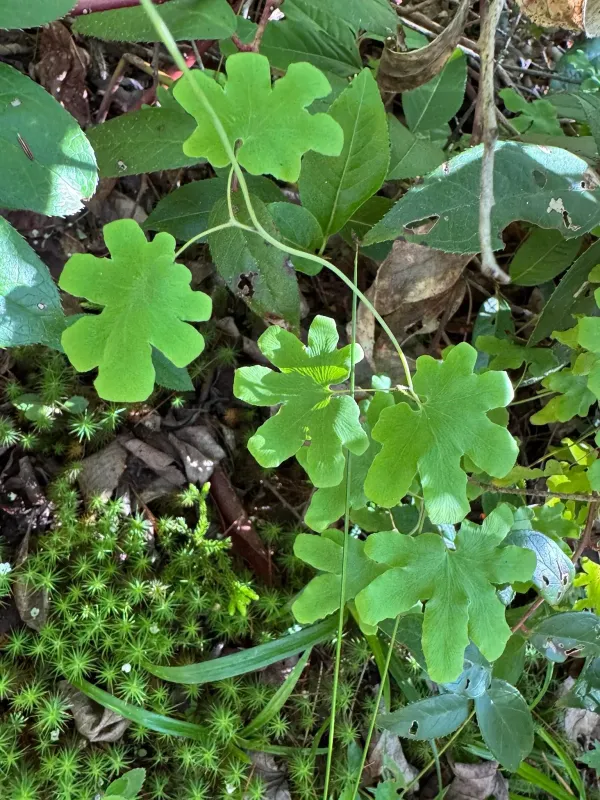
Description
Growing requirements
The climbing fern (Lygodium palmatum) is a unique perennial species belonging to the Lygodiaceae family. It is distinct for its habit of twining around supporting structures, which is an uncommon trait among ferns found in North America.
The plant originates from the eastern United States, where it thrives in moist, acidic forest soils. Its botanical features include palmate leaf segments that give it an elegant appearance and differentiate it from other fern species in its habitat.
Cultural requirements involve maintaining high soil acidity and constant moisture levels. The plant is notoriously difficult to transplant, necessitating care when selecting a location that mimics its native wetland edge environments.
It prefers partial shade and high ambient humidity. In cultivation, it is often kept in temperate greenhouses or controlled environments where the microclimate can be strictly managed to prevent leaf dehydration.
Economic use of Lygodium palmatum is limited to conservation projects and botanical research. Because it is endangered in many states, propagation is strictly controlled to ensure the survival of the species and prevent habitat destruction.
Main diseases and pests
Threats to the climbing fern are primarily ecological, stemming from habitat loss and drainage of wetlands. Urban development often encroaches on its natural range, making it a focus of conservation efforts.
Pests such as spider mites and scale insects are common in greenhouse settings. Management requires careful monitoring and the application of integrated pest management practices to protect the delicate fronds.
Fungal pathogens associated with overly damp and stagnant environments present a significant risk. Proper ventilation is essential to maintain plant health and prevent the development of root and stem rots.
Structural damage from inadequate support can inhibit growth, as the plant relies on vertical climbing to reach the light levels necessary for photosynthesis. Sturdy, naturalistic supports are recommended for healthy growth.
Compaction of the soil and fluctuations in pH levels are major chemical threats to the health of the rhizome system. Regular soil testing is vital for maintaining the acidic conditions preferred by this specialized fern.