
Wilson's honeysuckle
Lonicera nitida Wils.
Description
Growing requirements
Wilson's honeysuckle (Lonicera nitida) is an evergreen or semi-evergreen shrub belonging to the Caprifoliaceae family. Native to the mountainous regions of Western China, it has become a staple in temperate ornamental horticulture due to its attractive foliage.
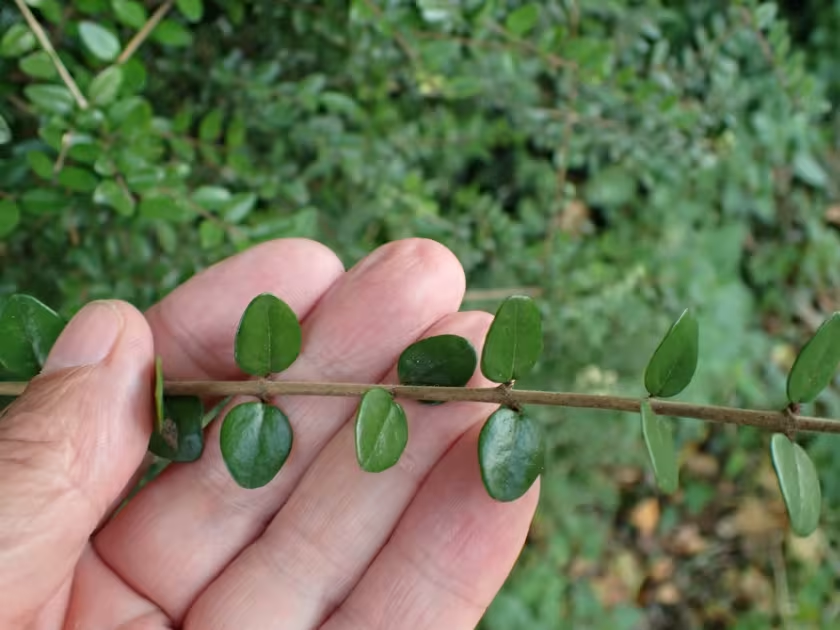
The botanical structure of this shrub is defined by its small, glossy, deep green leaves and dense, branching habit. It produces long, thin stems that allow for significant flexibility, making it an excellent candidate for complex architectural gardening projects.
Regarding cultivation requirements, the plant thrives in fertile, moist, and well-drained soils. While it prefers full sun for optimal density and color, it is notably tolerant of partial shade, which adds to its versatility in various garden microclimates.
The climate requirements include protection from harsh drying winds and deep freezes. While hardy in many regions, young plants may require winter protection to prevent dieback during particularly severe cold snaps, especially in exposed locations.
The primary horticultural application for Lonicera nitida is the creation of formal hedging and topiary. Because it responds exceptionally well to frequent pruning, it is widely used by designers to create low maintenance, structured borders and intricate garden sculptures.
Main diseases and pests
Wilson's honeysuckle is generally robust but can be susceptible to powdery mildew if planted in overcrowded or poorly ventilated conditions. Ensuring adequate airflow between plants is the primary cultural practice to minimize fungal risks.
Pest issues are usually limited to occasional attacks from aphids or scale insects. Monitoring the undersides of the leaves during the active growing season allows for early detection and intervention using organic insecticidal soaps if an infestation occurs.