
Amur honeysuckle
Lonicera maackii (Rupr.) Maxim.
Description
Sowing dates
The propagation of Amur honeysuckle is typically carried out via seeds that require a stratification process to break dormancy. Sowing directly in the soil during late autumn allows nature to handle the stratification, resulting in successful germination during the following spring.
Alternatively, vegetative propagation is widely used for maintaining specific traits of the cultivar. Greenwood cuttings taken in mid-summer are placed in a humid environment, which encourages rapid root formation and ensures a high survival rate of the new saplings.
Layering is another reliable method where a low-hanging branch is pinned to the ground and covered with soil. Once the branch develops its own root system, it can be detached and replanted elsewhere, providing a robust plant for landscape use.
Site selection is crucial, as Lonicera maackii requires significant sunlight to reach its full ornamental potential. While the plant shows some tolerance for partial shade, its growth density and flowering intensity are significantly better in open, sunlit areas.
When planting, it is recommended to maintain a distance of approximately one meter between individual shrubs to facilitate proper air circulation. This spatial arrangement prevents foliage overcrowding and reduces the risk of moisture-related diseases in the hedge.
Growing requirements
Amur honeysuckle is a deciduous shrub belonging to the Caprifoliaceae family, native to East Asia. It is highly valued in horticulture for its resilience and ability to thrive in various soil types, ranging from sandy loams to heavier clay-based soils.
Climate adaptability is one of the plant's greatest strengths, as it is exceptionally hardy and can withstand freezing temperatures without significant damage. This makes it a popular choice for urban landscaping in regions with harsh winter conditions.
Regarding soil requirements, the plant prefers well-drained, fertile substrates with a neutral pH level. Although it can tolerate moderate soil moisture, it avoids waterlogged conditions which may negatively affect its root health and long-term vitality.
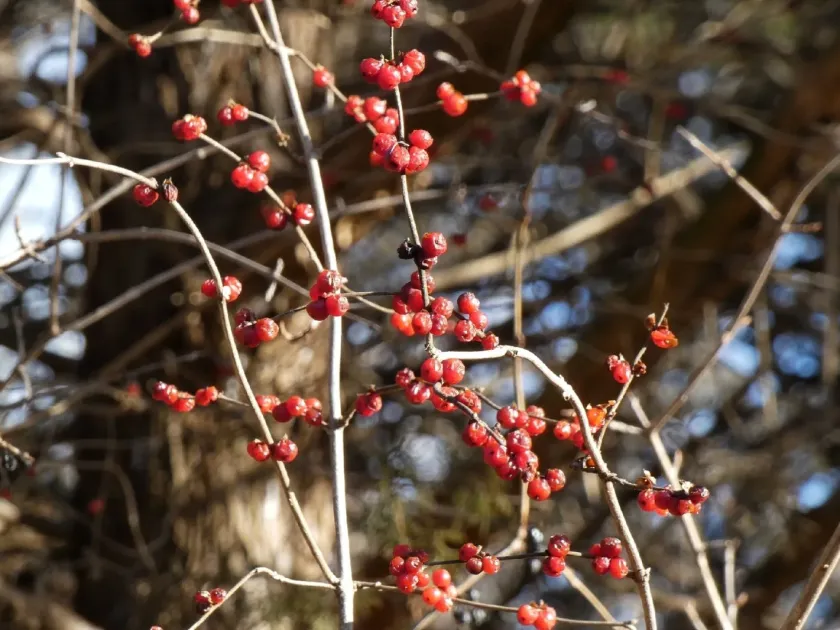
Botanical features include dark green, ovate leaves and fragrant white flowers that age into a yellowish hue. In autumn, the shrub produces dense clusters of red berries which serve as a food source for birds, although these fruits are inedible to humans.
In landscaping, this species is primarily used for privacy screens, large-scale ornamental hedges, and windbreaks. Its robust growth habit allows it to be pruned into various shapes, though it looks best when allowed to maintain its natural, spreading form.
Main diseases and pests
Powdery mildew is a common fungal threat that affects the foliage of Amur honeysuckle during hot and humid months. Proper spacing and thinning out the central branches of the shrub help improve air circulation, effectively reducing the risk of fungal infections.
Aphids represent a frequent pest problem, feeding on the tender young shoots and causing leaf curling. Regular monitoring of the shrub during spring allows for early intervention, often using insecticidal soaps to keep populations under control without chemical excess.
Root rot remains a concern if the soil is poorly drained. Ensuring that the planting site has adequate slope or artificial drainage systems is essential to protect the plant from standing water, which can prove fatal to the root system over time.
Environmental stress in urban areas can sometimes lead to reduced vigor, making the shrub more susceptible to secondary infections. Regular fertilization during the growing season helps the plant maintain its natural resistance against pests and minor diseases.
In the event of severe pest infestation or widespread disease, prompt pruning and removal of affected branches are advised. Maintaining a clean garden environment around the base of the shrub significantly reduces the buildup of pathogens and insect larvae.