
Pallas honeysuckle
Lonicera caerulea L. var. kamtschatica Sevast.
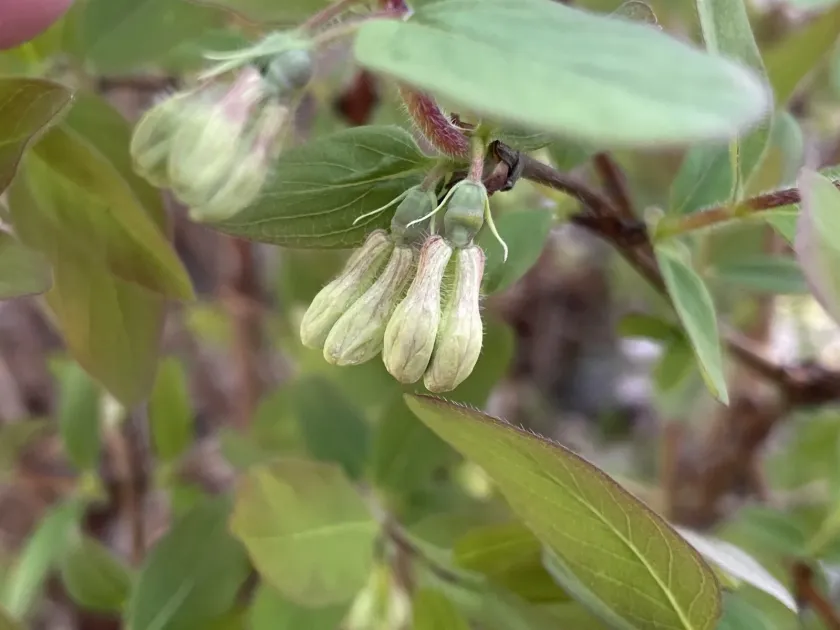
Description
Sowing dates
Pallas honeysuckle is a deciduous shrub belonging to the Caprifoliaceae family. While propagation via seeds is possible, it is typically carried out by professional nurseries or for selection purposes, as cuttings are preferred for ensuring varietal consistency.
If sowing seeds, they should be planted in late autumn to allow for natural cold stratification during winter. The depth of planting should be shallow, usually around 1–2 cm, in a loose, well-draining soil mix.
When establishing a plantation, seedlings are best transplanted in early spring or autumn. Providing a spacing of 1.5 to 2 meters between plants is crucial to avoid overcrowding and to allow sufficient light penetration.
Cross-pollination is a biological necessity for this species. To achieve optimal yield, growers should plant at least three different compatible varieties close together to encourage insect activity and fruit setting.
The site selection should prioritize full sun exposure. While the shrub can tolerate partial shade, fruit sweetness and yield quantity are directly correlated with the amount of sunlight received during the growing season.
Growing requirements
This shrub is highly adaptable to various soil types, but it thrives in nutrient-rich loams or sandy loams with a slightly acidic to neutral pH. Avoid planting in waterlogged areas as it is sensitive to root rot.
Consistent moisture levels are required, particularly during the fruit development stage. Mulching the base of the plant is a highly recommended practice to retain soil moisture and suppress the growth of competitive weeds.
Fertilization should be balanced. Organic compost applied annually in the autumn helps maintain soil fertility, while a light application of nitrogen-rich fertilizers in early spring stimulates healthy vegetative growth.
Pruning is an essential maintenance task. It is recommended to remove dead, damaged, or aging branches once the plant has entered dormancy to prevent overcrowding and improve air circulation within the canopy.
The plant is exceptionally winter-hardy and requires no special protection against cold. It is well-suited for temperate climates, even in regions with significant frost duration throughout the winter months.
Yield
Pallas honeysuckle typically begins to produce fruit in the third or fourth year after planting. The yield increases annually, reaching full commercial productivity as the plant matures between 7 and 12 years of age.
The berries are elongated and possess a characteristic blue-violet color with a waxy bloom. They are highly prized for their unique nutritional profile, being rich in Vitamin C, B-complex, and various antioxidants.
Average yield per mature shrub ranges between 2 to 4 kilograms. Under optimal care and using selected high-yield varieties, the productivity can be maintained consistently over many years.
Harvesting is characterized by the need for multiple passes, as berries do not ripen simultaneously. Monitoring the color change is the most reliable indicator of harvest readiness for the individual fruits.
The fruit is highly versatile in the food industry. It is commonly used for jams, jellies, juices, and is increasingly popular in the frozen fruit market due to its ability to retain nutrients well.
Main diseases and pests
Pallas honeysuckle is relatively resistant to pests and diseases, but powdery mildew can appear in humid, stagnant conditions. Improving air circulation through proper pruning is the best preventative measure.
Aphids can occasionally infest young shoots, potentially causing leaf curling and reduced vigor. Control should involve natural predators or mild horticultural soaps before the bloom period to protect pollinators.
Leaf spot diseases may occur during wet springs. Removing and destroying infected leaves helps to minimize the spread of fungal spores throughout the plantation during the following growing season.
Maintaining a clean cultivation area free of debris is essential. This practice significantly reduces the overwintering sites for both fungal pathogens and various insect larvae that target berry shrubs.
Integrated pest management, including the use of resistant varieties, is the preferred strategy. Chemical intervention should be avoided close to the harvest period to ensure product safety and quality.
Harvesting
The harvest phase requires careful handling because the berries are delicate. The fruit reaches maturity when the skin turns deep blue and the underlying flesh becomes soft and juicy.
Using a tarp or a specialized fabric under the bushes is a standard labor-saving technique. This allows the grower to catch the berries that naturally detach from the stem upon reaching peak ripeness.
Immediate cooling is recommended post-harvest to preserve fruit quality. Storing the berries at low temperatures slows down respiration and helps maintain their integrity for longer shipping times.
Packaging should be designed to allow for adequate ventilation. Rigid containers are preferred to prevent the weight of top layers from crushing the berries at the bottom of the punnet during transport.
For long-term storage, flash-freezing is the gold standard. This method allows the fruit to maintain its flavor profile and nutritional density, making it available for processing or direct consumption year-round.