
Lithops pseudotruncatella
Lithops pseudotruncatella
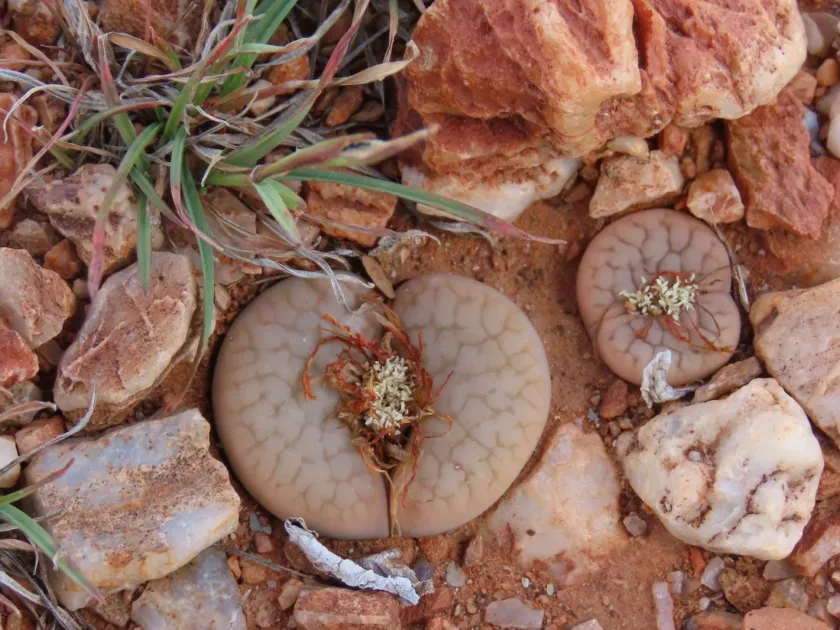
Description
Sowing dates
The sowing process for Lithops pseudotruncatella should be initiated during early spring to leverage the natural increase in day length and intensity.
Use a sterile, well-draining mineral substrate consisting of fine grit and sand to provide a stable foundation for the delicate root systems.
Seeds should be distributed evenly across the surface of the moistened medium without being buried to ensure they receive sufficient light for germination.
Maintaining a consistent temperature between 20°C and 25°C is crucial for achieving high germination rates within the first two weeks after sowing.
During the initial growth stages, keep the humidity high by covering the container, while ensuring adequate airflow through periodic ventilation.
Growing requirements
Lithops pseudotruncatella is a fascinating member of the Aizoaceae family, naturally occurring in the arid regions of Namibia and surrounding areas.
The plant exhibits a unique botanical morphology, appearing as two fleshy leaves that function as water storage organs and camouflage against dry terrain.
Cultivation requires extreme exposure to sunlight to maintain the plant's natural compact form and prevent etiolation or abnormal stretching.
Watering must be strictly regulated based on the plant's phenological cycle, with absolute dryness required during the winter dormant period.
The soil structure must be almost entirely inorganic, incorporating pumice or volcanic rock to prevent the accumulation of moisture around the neck.
Main diseases and pests
The most frequent challenge in cultivating this species is rot, typically triggered by overwatering or poor ventilation during the dormant phase.
Mealybugs are the primary pest threat, often found hidden deep within the central fissure, which makes them difficult to eradicate manually.
Spider mites can also become problematic in dry, stagnant environments, causing visible scarring on the epidermal surface of the plant.
Effective pest management involves regular inspections and the application of suitable horticultural treatments if colonization occurs on the leaves.
Preventative measures include maintaining excellent air circulation and ensuring the substrate is fully dried before any subsequent water application.