
Lithops julii
Lithops julii
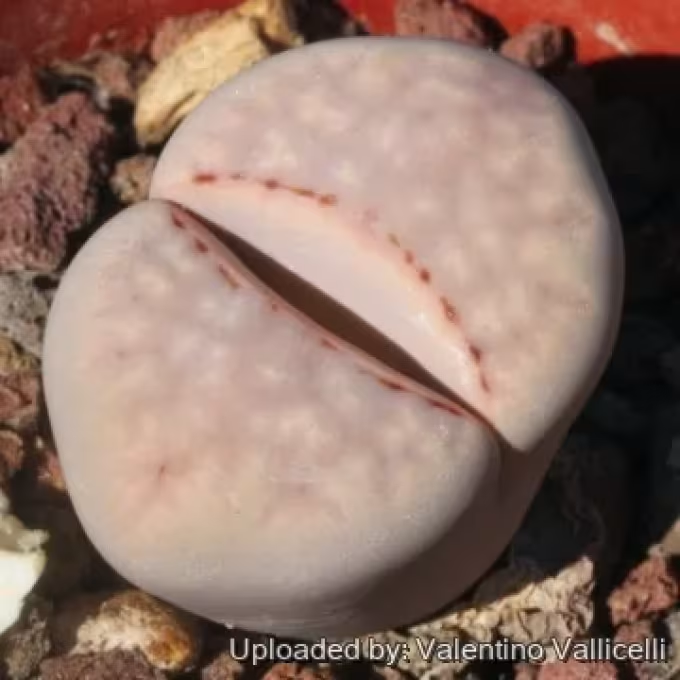
Description
Sowing dates
Lithops julii belongs to the Aizoaceae family and is a miniature succulent known as a living stone. Sowing is best performed in spring or early summer to take advantage of stable daylight conditions.
For sowing, use a slightly acidic, well-draining substrate consisting of a mix of sand, perlite, and loam. Seeds should be sown on the surface without deep burial, pressing them gently into the moist soil.
Cover the containers with glass or plastic to create a greenhouse effect, maintaining a temperature between 22 and 25 degrees Celsius. Regular ventilation is crucial to prevent mold growth on the substrate surface.
Seedlings typically emerge unevenly, usually 7 to 14 days after planting. Once germinated, the cover should be removed gradually to acclimate the young plants to their surroundings.
The first year of life for Lithops julii is critical, requiring a careful balance to avoid both total soil desiccation and excessive moisture retention in the root zone.
Growing requirements
This species requires intense sunlight, preferably on south or southeast-facing windowsills. Insufficient light leads to etiolation, where the plant loses its characteristic compact shape.
Temperature during the active growth phase should range from 20 to 30 degrees Celsius. During the winter dormancy period, the plant requires cool conditions, ideally between 10 and 12 degrees.
Watering must be strictly regulated; during active growth, water only when the soil substrate has completely dried out. Always avoid getting water inside the fissure between the leaves.
The soil should be mineral-heavy and extremely low in organic matter, featuring components like granite grit, coarse sand, and perlite. A neutral or slightly acidic soil pH is preferred.
Low relative humidity is ideal for this culture, as Lithops julii has evolved to survive in the arid environments of Southern Africa.
Main diseases and pests
Overwatering is the primary threat to Lithops julii, inevitably leading to root rot and collapse of the plant body. Severely affected specimens are usually impossible to save.
Among pests, mealybugs pose the greatest threat, hiding in the central fissure between the leaves. They are easily identified by their white, cotton-like exudate.
Spider mites can also attack the plant if the air remains too dry and stagnant for extended periods. Specialized acaricide treatments are required for control.
To prevent disease, ensure proper air circulation and never allow water to sit in the pot. Using sterilized tools during repotting is an essential horticultural practice.
If fungal infections appear as dark spots, treat the plant with systemic fungicides immediately and replace the contaminated soil mix entirely.