
Lithops dorotheae
Lithops dorotheae
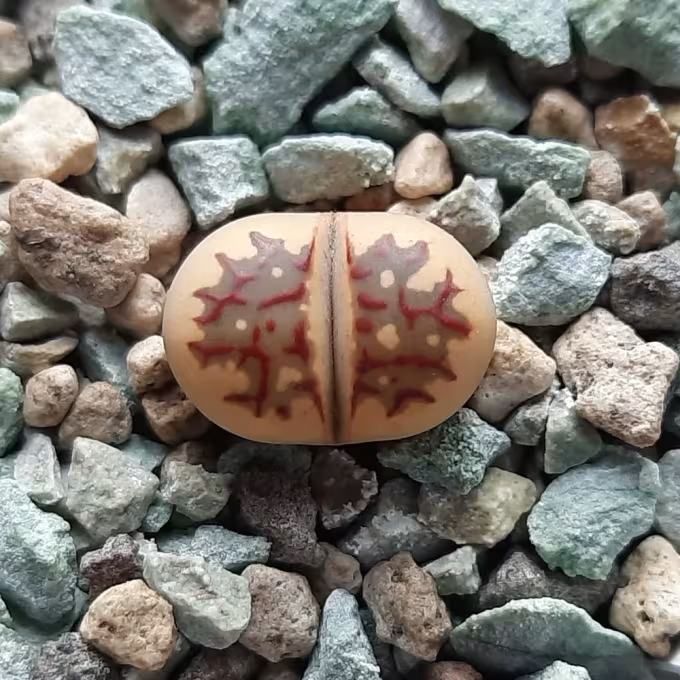
Description
Sowing dates
Sowing seeds of Lithops dorotheae should be performed during the early spring to ensure the seedlings receive the maximum daylight required for development.
Use a shallow seed tray filled with a fine-grained, inorganic mix to provide excellent drainage, as standing water will quickly kill the germinating seeds.
The seeds are sown on the surface and should be misted lightly, then covered with a clear lid to maintain high humidity during the initial germination phase.
Once germination occurs, gradually remove the cover to increase ventilation and prevent the development of damping-off diseases common in humid environments.
Keep the seedlings in a bright location but avoid direct scorching sunlight until they are mature enough to handle the intensity of full exposure.
Growing requirements
Lithops dorotheae is a member of the Aizoaceae family, naturally occurring in the arid regions of Southern Africa, characterized by rocky, nutrient-poor soil.
This species requires exceptionally high light levels to maintain its compact form; otherwise, the plant will become etiolated and lose its aesthetic appeal.
Watering must follow a strict seasonal cycle: water sparingly during the growth phases and ensure total dryness during the plant's winter dormancy period.
The substrate must be primarily mineral-based, consisting of coarse sand, pumice, and crushed grit to ensure that roots are never sitting in water-logged soil.
The plant exhibits a specialized succulent anatomy with a leaf pair designed to store moisture, allowing it to survive long periods without significant rainfall.
Main diseases and pests
The most common threat to Lithops dorotheae is root rot, which typically stems from overwatering or a potting medium that retains too much moisture.
Mealybugs are the primary pest concern, often hiding deep within the central fissure where they feed on the succulent tissue and weaken the plant.
Spider mites can also become an issue in environments with low humidity and poor air circulation, often leaving fine webbing on the plant's surface.
Fungal infections can manifest as dark spots on the skin of the plant if humidity levels remain consistently high without adequate airflow.
Proactive management involves monitoring the plant's texture; soft or mushy areas often indicate the beginning of decay that requires immediate attention.