
Lithops fulviceps
Lithops fulviceps
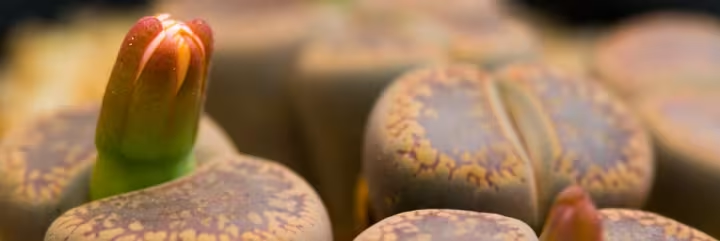
Description
Sowing dates
Sowing Lithops fulviceps seeds is best performed in early spring, ensuring that the seedlings receive maximum natural light during their initial developmental stage.
The substrate for germination should be highly porous, composed mostly of fine gravel or coarse sand to prevent damping-off, which is common in succulent seedlings.
Seeds are placed on the surface of a slightly damp medium and covered with a transparent dome or glass to maintain a high level of humidity until germination occurs.
Once seedlings emerge, the ventilation should be gradually increased to prevent fungal infections and to help the delicate plants harden off to the ambient environment.
Avoid any fertilization during the first year of growth, as the young lithops derive sufficient nutrients from their specialized mineral-based germination mix.
Growing requirements
Lithops fulviceps is a fascinating member of the Aizoaceae family, naturally occurring in arid regions where it has evolved to mimic surrounding stones for protection.
This species requires full, intense sun exposure for at least 6–8 hours daily to maintain its compact shape and to promote the development of its distinct reddish patterns.
The soil must be exceptionally well-draining, consisting of 70% mineral grit (perlite, pumice, or sand) and 30% organic matter to ensure roots are never left in water.
Watering is strictly seasonal: plants must be kept completely dry during the winter resting period, even if they appear slightly shriveled, to prevent lethal rot.
The plant thrives in temperatures between 20°C and 30°C during the growing season, while during winter, it requires a cool dormant period to trigger flower induction.
Main diseases and pests
Overwatering remains the primary threat to Lithops fulviceps, quickly causing the stem to rupture and decay, a condition which is often irreversible once the core is affected.
Pests like mealybugs can cause significant damage by feeding on the sap between the leaf lobes, creating entry points for secondary bacterial or fungal infections.
To detect potential issues early, cultivators should observe the firmness of the leaf lobes; soft or mushy areas often indicate underlying root rot or infestation.
Proper air circulation is crucial for the health of these succulents; stale, humid air creates the perfect environment for spider mites to thrive on the leaf surface.
Integrated pest management, including the use of neem oil or targeted miticides, is recommended for controlling outbreaks while maintaining the sensitive health of the lithops.