
Lithops aucampiae
Lithops aucampiae
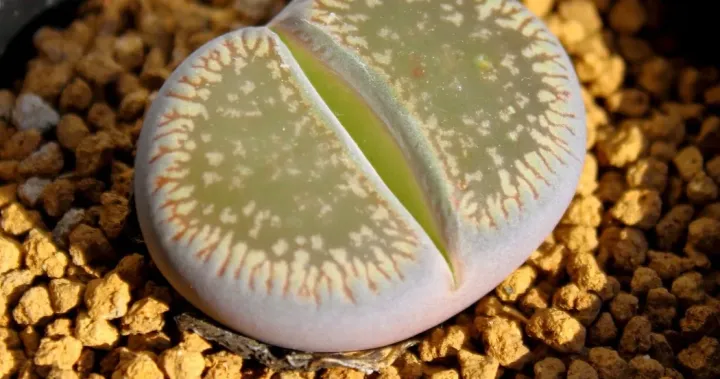
Description
Sowing dates
Lithops aucampiae, belonging to the Aizoaceae family, is a captivating succulent that mimics the appearance of stones in its native habitat of South Africa.
Propagation is typically carried out via seeds. Sowing should occur in late winter or early spring to leverage the increasing day length for better seedling health.
The substrate for sowing must be primarily mineral-based, such as fine grit or sand, ensuring excellent drainage from the very beginning of the plant's life cycle.
Seeds are placed on the surface and kept under a cover to maintain high humidity until germination, which usually takes about one to two weeks.
Once seedlings emerge, the humidity must be gradually reduced. This transition is vital to strengthen the cuticle and prevent the young plants from rotting.
Growing requirements
These plants require maximum sunlight to maintain their compact form and characteristic coloration. In low light, they become elongated and unhealthy.
The soil should be a highly porous mix. A combination of coarse sand, pumice, and a small amount of non-organic soil is ideal for mimicking their natural conditions.
Watering requires strict adherence to the plant's seasonal cycle. Never water when the plant is shedding its old leaf pair for a new one.
Temperature management is key: provide a warm, dry summer and a cool, dry winter resting period, which is essential to trigger the development of flowers.
Good air circulation is mandatory. Without proper ventilation, the plants remain prone to overheating during hot summers and moisture retention in the soil.
Main diseases and pests
The primary threat to Lithops aucampiae is overwatering, which quickly leads to catastrophic root decay and the death of the plant body.
Mealybugs are the most common pest, often hiding in the central fissure of the plant where they are protected from topical treatments.
Root aphids can also be an issue, often going unnoticed until the plant loses its grip on the soil due to damaged root systems.
Fungal infections can occur if the plants are kept in stagnant, humid air, resulting in soft, discolored spots on the surface of the succulent.
Effective pest management includes using systemic insecticides and keeping the plants in a clean, dry, and well-ventilated environment.