
Lithops bromfieldii
Lithops bromfieldii
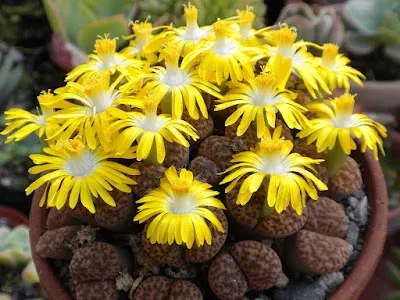
Description
Sowing dates
Sowing seeds of Lithops bromfieldii is best performed in early spring, ensuring that the developing seedlings have enough light to grow compact and healthy.
A well-draining, mineral-based substrate composed of grit, coarse sand, and a minimal amount of potting soil is essential to prevent seedling rot.
The seeds should be scattered thinly over the damp surface of the soil and should not be covered with a thick layer of medium, as they need light to germinate.
Covering the seed tray with a glass or plastic lid helps maintain the humidity needed during the first weeks of the life cycle of the seedlings.
Once germination occurs, ventilation should be increased gradually to ensure the seedlings develop a robust structure and acclimate to their future environment.
Growing requirements
Lithops bromfieldii is a member of the Aizoaceae family, native to the arid rocky habitats of South Africa where it mimics the surrounding stones.
The cultural requirements demand intense direct sunlight, which is necessary to maintain the natural color patterns and the typical flattened leaf shape.
Proper soil composition is crucial; it must be highly porous and inorganic to mimic the extreme conditions of its native habitat and prevent root hypoxia.
Watering must follow the plant's seasonal cycle, with complete withdrawal during the winter rest phase and during the hottest peaks of the summer.
Air circulation is just as vital as light; a stagnant environment can lead to overheating and encourage the spread of opportunistic fungal pathogens.
Main diseases and pests
Root rot is the most significant threat to Lithops bromfieldii, usually caused by overwatering or soil that retains moisture for too long.
Mealybugs are the most common pests, often settling between the lobes where they remain hidden from initial inspection until the plant begins to show stress.
Spider mites can occur if the humidity levels are consistently too low, leading to discoloration and microscopic damage to the plant's epidermis.
Control of these pests should be carried out with specialized products, avoiding oil-based solutions that can destroy the waxy layer of the leaves.
Preventative measures include regular observation of the plant tissue, ensuring a clean growing environment, and avoiding nitrogen-rich fertilizers that cause rapid, weak growth.