
Lithops optica
Lithops optica
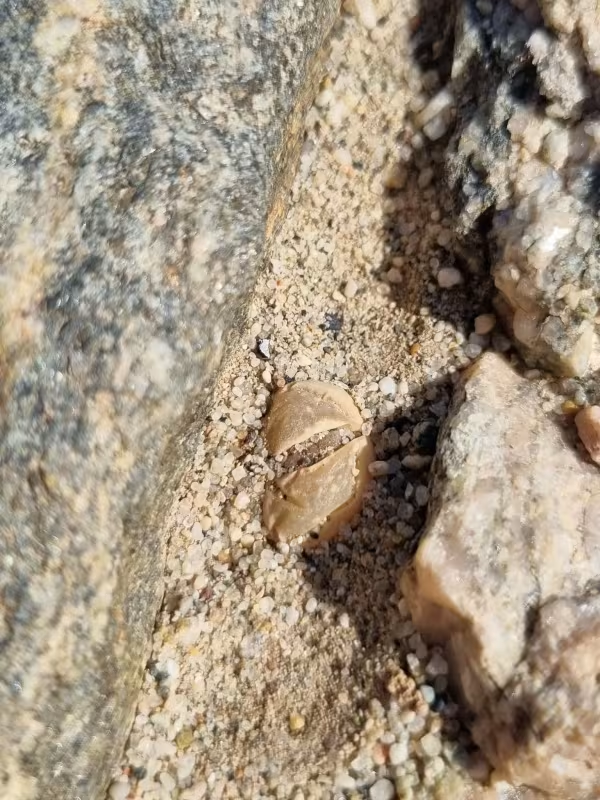
Description
Sowing dates
Sowing seeds of Lithops optica is best performed in late winter or early spring. This allows the seedlings to benefit from increasing natural light during their critical early growth phase.
The substrate for sowing must be extremely well-draining, consisting primarily of fine grit, sand, and a small fraction of organic peat. Seeds are sown on the surface and pressed gently.
Maintaining high humidity is essential for germination, which is achieved by covering the container with transparent plastic or glass until the seedlings emerge.
Consistent temperatures between 22 and 25 degrees Celsius are required for success. Once germination occurs, humidity levels should be gradually reduced to prevent rot.
Seedlings remain sensitive for a long time. It is crucial not to disturb them by pricking out too early, as they require stability to establish their taproot system.
Growing requirements
Lithops optica belongs to the Aizoaceae family, native to the arid environments of Namibia and South Africa. These plants exhibit advanced leaf succulence to store water.
High light intensity is non-negotiable for this species. Intense sun ensures the plant retains its compact shape and prevents the loss of its natural pattern and colors.
The potting mix must be almost entirely inorganic. A combination of volcanic rock, coarse sand, and perlite provides the necessary aeration for root health.
Watering must follow the plant's seasonal cycle. Never water when the old leaf pair is being absorbed by the new one, as this disrupts the natural physiological process.
Adequate air circulation is vital, especially during summer months, to prevent the overheating of the soil and to minimize the risks of fungal proliferation.
Main diseases and pests
Root rot caused by overwatering remains the number one threat to Lithops optica. Once rot sets in at the base, it is often too late to save the plant.
Mealybugs are a frequent pest that hides deep within the cleft of the succulent. They can cause severe damage by sucking sap, which stunts the plant's development.
Root aphids pose a hidden danger, attacking the root system directly. Frequent soil inspections are necessary to detect their presence early before significant damage occurs.
Improper light conditions lead to etiolation, where the plant stretches out and weakens, making it significantly more susceptible to bacterial and fungal infections.
Fungal leaf spot may occur if the ambient humidity is too high without sufficient ventilation, requiring the immediate application of fungicides and improved airflow.