
Lithops lesliei
Lithops lesliei
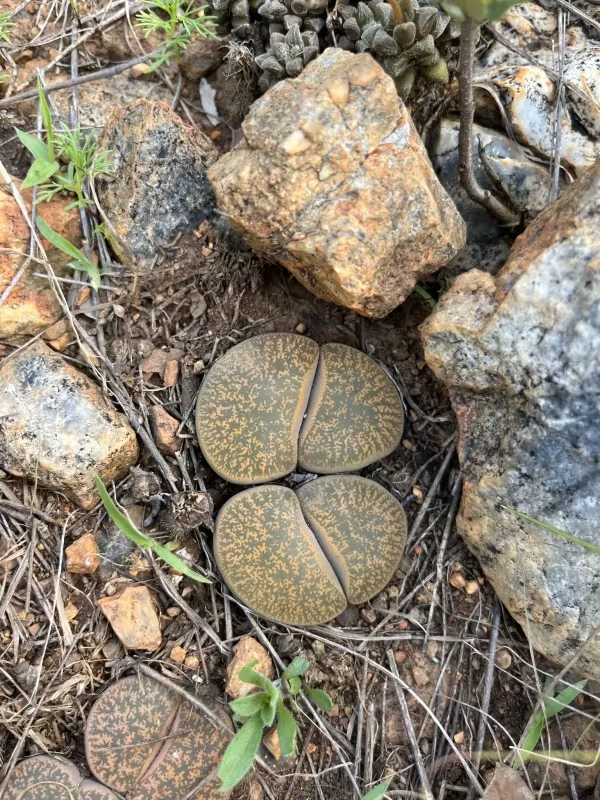
Description
Sowing dates
Sowing Lithops lesliei seeds is best achieved in early spring when the photoperiod begins to extend. The seeds are minuscule and should be scattered over a specialized mineral-based substrate that allows for rapid drainage.
A mix of fine grit, washed sand, and a minimal amount of silt is considered ideal for sowing. The surface should be kept moist but not saturated during the initial germination phase to ensure successful seedling development.
Germination usually takes place within 7 to 14 days if the temperature is maintained between 22 and 25 degrees Celsius. Covering the sowing tray with a glass lid helps maintain the necessary humidity levels during this delicate stage.
Once seedlings emerge, it is critical to provide adequate ventilation to prevent damping-off disease. Gradually reducing humidity over the following weeks helps the young Lithops develop their characteristic succulent resilience.
Transplanting or pricking out seedlings should not be rushed; they may remain in the initial container for an entire season until they are robust enough to withstand individual repotting.
Growing requirements
Lithops lesliei, a member of the Aizoaceae family, is native to the arid regions of Southern Africa. Its biology is defined by an extreme adaptation to drought, featuring a split-body structure that mimics surrounding stones.
Light requirements are intense; this plant requires direct, bright sunlight for most of the day to maintain its compact, flat growth habit. Inadequate light exposure typically results in etiolation, which compromises the integrity of the plant.
The growing medium must be highly porous and inorganic. A typical commercial blend includes crushed granite or perlite with very little organic material, as the roots are highly susceptible to rot if organic decomposition occurs in the pot.
Watering must follow the plant's seasonal cycle strictly. During the summer, water sparingly only when the soil is completely dry; during the winter dormancy period, the plants should be kept entirely dry to prevent physiological stress.
Temperature fluctuations are naturally tolerated, but indoor specimens thrive when provided with warm summer days and a distinct cooling period during the winter months to encourage healthy cycle rotation.
Main diseases and pests
The primary threat to the health of Lithops lesliei is waterlogged soil, which leads rapidly to bacterial or fungal root rot. Once the root system is compromised by excessive moisture, the plant often collapses within a few days.
Mealybugs are the most common pests that infest these succulents, often nesting in the cleft between the two lobes. Manual removal or application of a specific succulent-safe insecticide is necessary to prevent infestations.
Spider mites may occasionally occur, especially in environments with poor air circulation and low humidity. Monitoring for fine webbing on the plant surface is essential for early detection and control.
Root mealybugs can cause significant damage without being immediately visible. If the plant shows signs of dehydration despite having a healthy-looking appearance, it is advisable to inspect the root zone for these pests.
Good air circulation is the best preventative measure against most pathogens. By avoiding excessive humidity and keeping the plant surface clean, the risk of disease is kept to a minimum.