
Leucophyllum pringlei
Leucophyllum pringlei (Greenm.) Standl.
Description
Growing requirements
Leucophyllum pringlei is an evergreen or semi-deciduous shrub belonging to the Scrophulariaceae family, native to the arid regions of Northern Mexico. The plant is highly adapted to extreme environmental conditions, including prolonged drought periods and intense solar radiation.
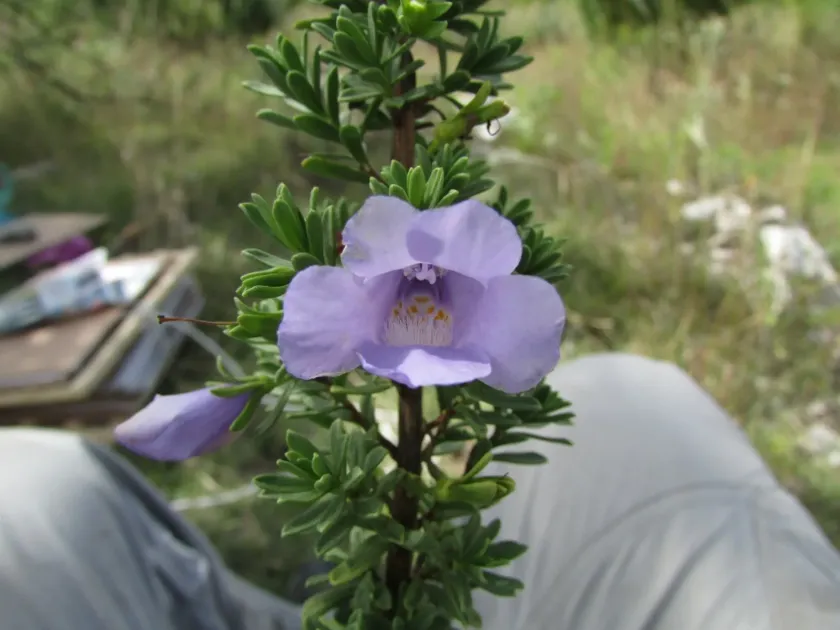
Botanically, this species is a dense shrub covered in silver-grey foliage, a trait caused by fine hairs that reduce moisture transpiration. Its bell-shaped flowers display vibrant violet or pink hues, making it a highly desirable specimen for xeriscaping and sustainable landscape design.
The culture has strict requirements for soil drainage; it cannot tolerate waterlogging, which leads to rapid root rot. The ideal substrate consists of light, rocky, or sandy soils with a neutral to slightly alkaline pH level.
For successful vegetative development, the plant requires full sun exposure throughout the day. In shaded conditions, the shrub becomes sparse, loses its compact habit, and significantly reduces its flowering intensity, which is usually triggered by changes in air humidity after dry spells.
Agricultural management is limited to minimal irrigation once the plant is established and periodic pruning to maintain its shape. As frost resistance is limited, the plant is often grown as a container crop in temperate regions, allowing for winter protection indoors.
Main diseases and pests
The primary threat to Leucophyllum pringlei involves fungal root diseases, which typically develop due to excessive soil moisture and poor aeration within the root zone.
In greenhouses or environments with high humidity, powdery mildew may occur, manifesting as a white powdery layer on the leaf surfaces, which severely compromises the aesthetic value of the shrub.
Among pests, sucking insects such as aphids and spider mites represent the greatest risk, often targeting tender new growth during the peak of the spring growing season.
Improper fertilization, particularly an excess of nitrogen, leads to rampant vegetative growth at the expense of floral production and decreases the shrub's natural resistance to environmental pathogens.
Effective prevention of these issues relies on maintaining proper air circulation, avoiding overhead irrigation that wets the foliage, and ensuring the substrate remains moderately dry to prevent saturation of the lower canopy.