
Hybrid Leucophyllum
Leucophyllum frutescens (Berland.) I. M. Johnst. x Leucophyllum langmaniae Flyr
Description
Growing requirements
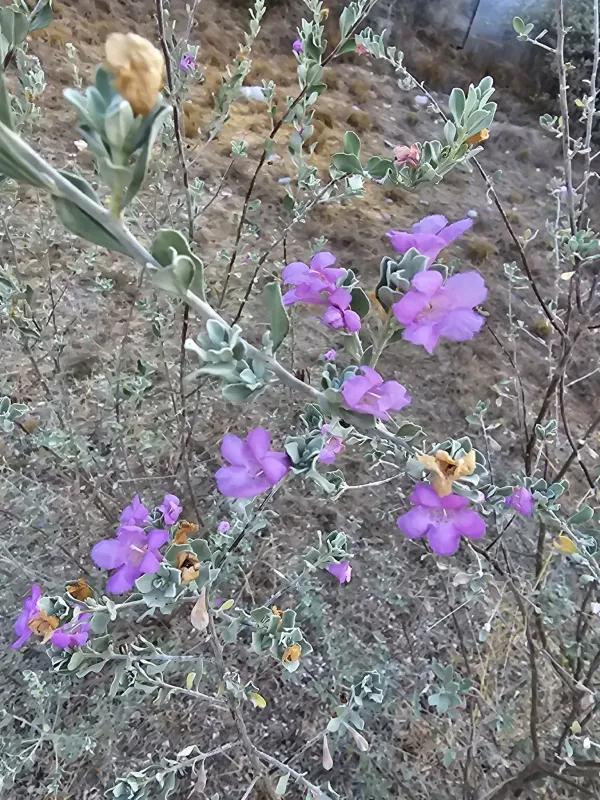
Hybrid Leucophyllum is a decorative evergreen shrub originating from a cross between Leucophyllum frutescens and Leucophyllum langmaniae, belonging to the Scrophulariaceae family.
Native to the arid regions of the southwestern United States and northern Mexico, this cultivar is highly specialized for survival in extreme heat and low-water environments, thriving under full sun exposure.
The primary soil requirement is excellent drainage; the plant is exceptionally prone to root rot if grown in heavy or waterlogged substrates, making rocky or sandy soils ideal for its cultivation.
Agronomic practices for this species are minimal, as it requires very little supplemental irrigation once established, emphasizing its importance in sustainable water-wise landscaping projects.
The plant is widely used as a structural component in xeriscaping, serving as a low-maintenance hedge or individual focal point due to its natural ability to withstand harsh environmental conditions.
Main diseases and pests
The most significant threats to Hybrid Leucophyllum are fungal pathogens, which typically manifest when the plant is subjected to poor air circulation or excessively moist growing conditions.
Insect pests, including spider mites and scales, may become problematic if the plant is under drought-induced stress or if the planting density is too high, preventing adequate airflow.
Cultural control is the most effective management strategy, focusing on proper spacing, avoiding overhead irrigation, and ensuring that the soil medium remains sufficiently aerobic.
Chemical intervention should be considered only as a last resort, using targeted systemic treatments, as the plant can exhibit sensitivity to certain horticultural sprays in intense heat.
Regular monitoring of the foliage and stems helps identify early infestations of pests, allowing for manual removal or localized treatment before they spread throughout the entire shrub.