
Texas sage
Leucophyllum frutescens (Berland.) I. M. Johnst.
Description
Growing requirements
Texas sage, or Leucophyllum frutescens, is a resilient evergreen shrub belonging to the Scrophulariaceae family. It is native to the arid regions of Texas and northern Mexico, where it has evolved to thrive in high-heat environments.
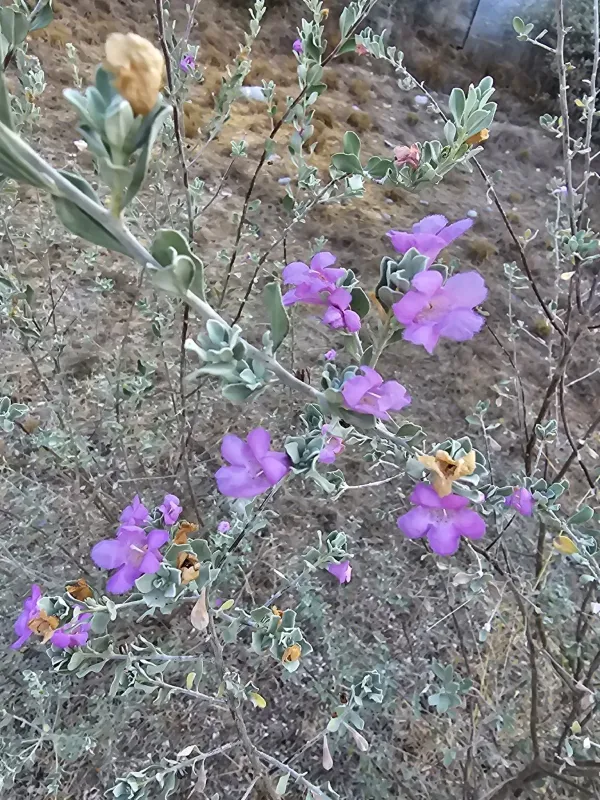
The plant is distinguished by its dense, silvery-gray foliage covered in tiny hairs. This adaptation is essential for minimizing transpiration and protecting the leaf tissue from the harsh, direct sun typical of desert climates.
Climatic requirements focus on full sun exposure. The plant requires at least six to eight hours of direct sunlight daily to maintain its compact form and ensure prolific blooming throughout the warm season.
Soil requirements are relatively simple, emphasizing the necessity of excellent drainage. While it can adapt to various soil types including clay, it performs significantly better in rocky, alkaline, or sandy soils where water does not pool.
Commercially and in landscape architecture, it is a staple for xeriscaping. Its high drought tolerance and low maintenance needs make it an ideal choice for water-efficient garden designs and large-scale public landscaping projects.
Main diseases and pests
The primary threat to the health of Texas sage is improper irrigation. Overwatering, especially in soil with poor drainage, frequently leads to root rot, which is often fatal to the specimen.
Pests are rarely a concern for this species. Its natural resistance is supplemented by its silvery texture, which deters many common insects. However, keeping the plant in dry, well-ventilated areas further prevents any potential infestations.
Maintenance against diseases involves ensuring the root zone remains dry between watering sessions. Even during extreme heat, the plant does not require frequent irrigation once it is well-established in the landscape.
Pruning is recommended to manage the shrub's growth and shape. If left unmanaged, it can become leggy; light pruning after the flowering cycles helps encourage a fuller, denser habit that is aesthetically preferred.
Overall, Leucophyllum frutescens remains a low-threat plant. Its primary biological demand is simply to avoid the specific conditions that cause fungal pathogens in root structures, such as stagnant water and poor soil aeration.